
T-money Complete Guide.
Updated October 11, 2026
Travel Library
Understand physical T-money cards, balances, top-ups and refunds before using Seoul transport.
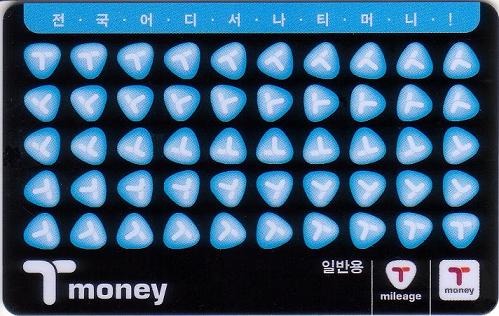
Decide which product fits your journeys
A stored-value transit card, a time-limited pass and a separate payment wallet are not interchangeable. Start with the exact route coverage and product name, then ask how you buy, add value and obtain any remaining balance. The Seoul international-card machine announcement concerns eligible ticket products; it does not prove that every ordinary Tmoney recharge accepts a foreign bank card.
| Situation | Decision | Check before committing |
|---|---|---|
| Stored-value transit card | Pay from the card’s transit balance | Keep purchase cost separate from loaded value |
| Time-limited pass | Check included services and validity dates | An excluded journey needs another payment method |
| Separate payment wallet | Read that operator’s own balance rules | Do not apply transit-balance refund rules automatically |
Keep the card and the backup plan accessible
Before entering a busy station, have the selected card or ticket ready. Follow the gate and onboard instructions for the service you are using. If a recharge or gate transaction fails, check the displayed balance and ask station staff before repeating the payment blindly. Near departure, compare the remaining journeys with the balance and use the exact product’s current refund conditions.
- Record the product name, not only the card colour.
- Check coverage against your airport and out-of-city trips.
- Keep a separate payment method for an excluded journey.
- Use the detailed refund guide only for the product it describes.
Check the original information
Practical planning guidance updated 9 October 2026. Availability, operating information and product conditions are confirmed by the relevant operator.
TRAVEL KNOW-HOW
Question answered
Do I need a T-money card in Seoul, and what should I know before topping it up?
Quick answer
A physical T-money card is still useful for everyday buses and subways. Treat the card price, stored balance and any travel-card extras as separate things, and do not assume every remaining won is automatically refundable.
What travelers usually get wrong
- They confuse card purchase price with refundable stored balance.
- They top up too much on the last day.
- They assume a transport card balance and a prepaid travel product balance are the same wallet.
Before you go
- Top up in smaller amounts until you understand your daily pattern.
- Keep enough cash or card backup for places that do not accept a transport card.
- Before departure, check refund rules and fees instead of leaving it to the airport.
Separate the card from the balance
The plastic card or travel-card product can have its own purchase cost, while the transport balance is the money you load for rides. Refund rules can treat those differently.
This is why a low-balance strategy is safer near the end of a trip.
Use it as a convenience tool, not a payment plan
T-money is primarily a transport convenience. It should not replace a proper payment plan for restaurants, shopping, hotels or emergencies.
Keep your main card, some cash and your transport balance separate in your planning.

Internal links for the next decision
Last updated and source-check structure
Original guide: 7 October 2026. Practical update: 8 October 2026. live operator timetables, fares, opening rules and financial terms must be rechecked at the original source before travel. This page is not a ticket, booking, payment or official transport notice.
Choose the ticket before choosing how to pay
A rechargeable Tmoney card and a short-term Climate Card are different products. Before buying a pass, compare its eligible routes with the journeys you actually plan to take. Do not assume an airport connection or a trip outside the covered area is included.
What changed in March 2026?
Seoul announced international-card payment for short-term Climate Cards and single-journey tickets at upgraded machines on Lines 1–8 from 17 March 2026. This does not establish international-card top-up support for every ordinary Tmoney card. Check the machine, selected product and displayed payment fee before confirming.
A practical purchase checklist
- Ask which product you are buying and which balance you are adding money to.
- Check eligibility for each planned trip, including your airport transfer.
- Keep the receipt and the current refund conditions.
- Keep a separate way to pay if a machine cannot accept your card.
Official references and verification scope
Editorial addition and listed source review: . The review covers the guidance and payment announcement cited below; it does not verify live service, every machine or a particular card issuer.
A subway ticket is not a reloadable transport card

Check the product before placing a card on a machine. A single-journey ticket is bought for a subway destination and returned to a deposit-refund device after exit. A rechargeable T-money card keeps its own balance for compatible journeys and is topped up rather than returned to that device.
Buy, load, tap and finish: one complete card journey
A transport card has two separate costs: the card itself and the spendable balance. Buying the plastic card does not load it. Keep a little Korean cash as a backup until you have confirmed the reload options available at your particular station.
1 · Buy the correct card
Ask a convenience-store cashier for a rechargeable T-money card and confirm the card price separately from your first top-up. Check whether a special tourist product has different benefits or refund rules.
2 · Load a usable balance
At a convenience store, ask to top up the card and state the amount. At a station, choose recharge, place only the intended card in the indicated reader area and keep it there until the machine confirms completion.
3 · Check the result
Read the balance shown on the reader or transaction receipt. Retrieve the card, change and receipt. If payment was accepted but the balance did not change, ask staff before repeating the transaction.
4 · Board with one card
On a bus, tap at the reader by the driver. On the subway, tap at the entry gate. Take the same card out of a wallet containing other contactless cards to avoid an ambiguous read.
5 · Finish and transfer correctly
Tap off at the bus exit and at the subway destination gate. Keep using the same card for the next eligible transfer; switching cards breaks the payment history.
6 · Use or refund the remaining balance
Eligible stores and taxis may accept T-money, but this is not universal. Check with the merchant. For a refund, confirm the outlet, balance limit and fee before handing over the card; special passes and card-price refunds follow different rules.
Which machine task do I need?
- Single-journey purchase: subway-only ticket for a destination.
- Recharge: add balance to a compatible existing transport card.
- Card sale: buy a physical card where explicitly offered; not every machine sells one.
- Deposit refund: return a single-journey card after exit; not a T-money balance refund.
- Fare adjustment: resolve insufficient fare near a gate, with staff help when necessary.
Foreign card, phone or payment error?
An overseas payment card is not automatically a Seoul transit card. Some new kiosks accept supported bank cards, but the operator’s machine instructions control the transaction. Smartphone transit availability depends on the card, wallet, device and service; a payment wallet being installed is not proof that its transit card is active. Do not repeatedly tap after a failed reader response. Show staff the card and transaction receipt.
T-money official product and service information ↗Official Seoul subway payment guidance ↗