

Question answered
What should a traveler prepare so a problem in Korea does not become harder because of language, documents or connectivity?
Save the emergency numbers before you need them
When you are in Korea, call 112 for police or 119 for fire and medical emergencies. These are emergency contacts, not booking or general travel-information lines. If you need help, give your location as clearly as you can and follow the responder’s instructions.
Keep your accommodation’s Korean address and a nearby landmark in an offline note. In a large building, the floor or entrance can matter as much as the street address. Do not assume a saved map pin alone will explain where you are.
Source: Korea Tourism Organization emergency FAQ. Checked 8 October 2026.
For ordinary travel questions or interpretation when your SIM cannot place a voice call, open the official VISITKOREA 1330 page over an available internet connection. It provides an online voice-call option and browser-based 1330 Messenger chat without an app download; Wi-Fi calls are listed as free, while mobile-data charges may apply. Save the page before departure and include the place name, Korean address and specific question when requesting help. This is a visitor-assistance fallback, not a substitute for 112 or 119 in immediate danger. Read the official instructions ↗
Quick answer
Before travel, save emergency numbers, embassy/consulate contacts, insurer details, accommodation address, medication names and a way to reach trusted contacts. In an immediate emergency, use local emergency services rather than a travel website. Koreafolio can help you prepare, but it cannot respond for you.
What travelers usually get wrong
- They store emergency details only inside a phone that may be lost, locked or out of battery.
- They assume travel insurance support will know their exact location or Korean address automatically.
- They wait until a problem starts to find embassy, medical or police contact information.
Before you go
- Keep one offline note with passport copy location, insurance policy number, hotel address and emergency contacts.
- Write medication names generically, not only as a brand from your home country.
- Share your itinerary and accommodation address with one trusted person before departure.
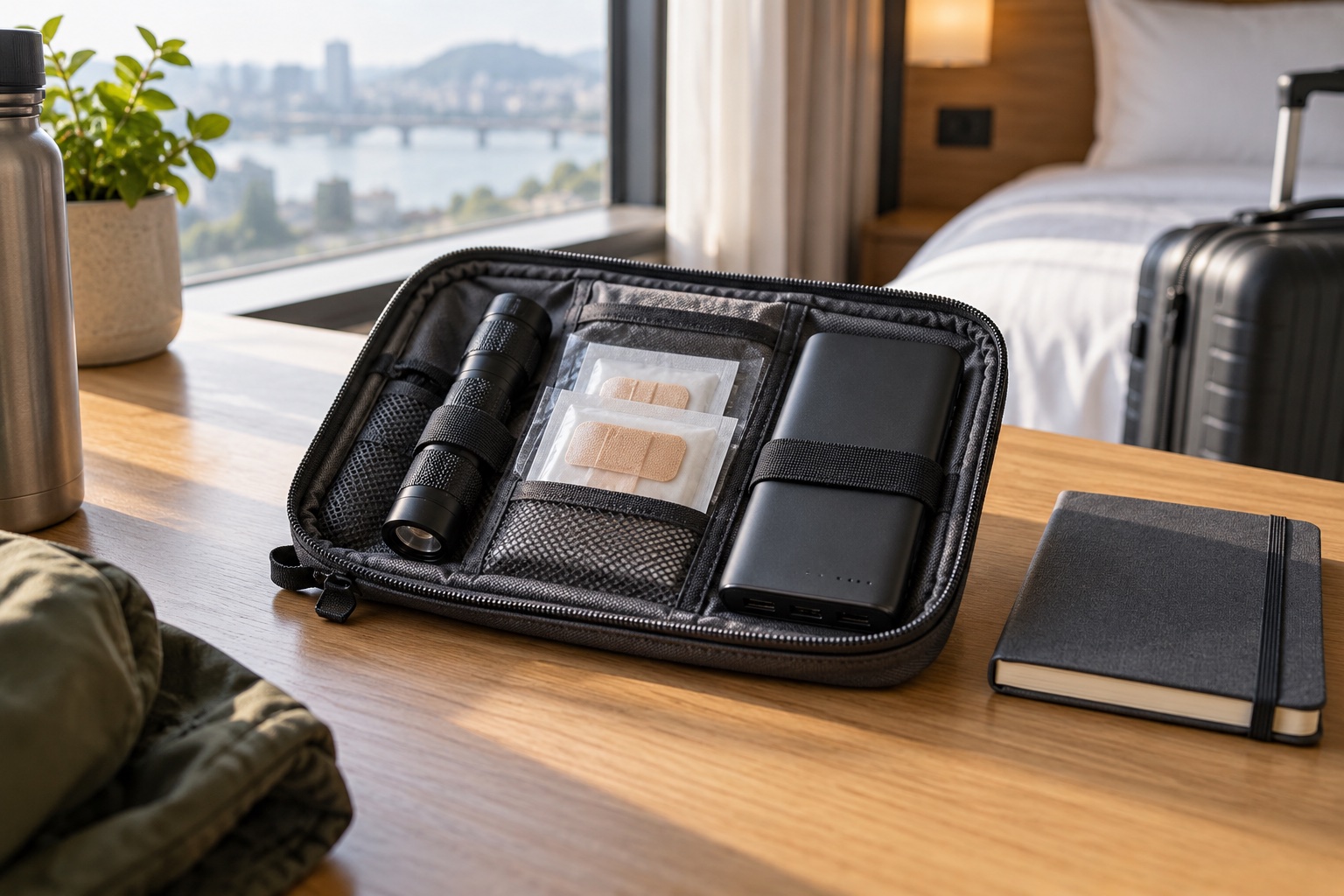
Immediate danger vs travel inconvenience
Separate true emergencies from ordinary travel problems. Injury, fire, crime, serious illness or danger needs local emergency response first. A missed train, lost reservation, minor refund issue or app failure needs a slower support process.
This distinction matters because the right contact changes: emergency service, hotel desk, transport operator, insurer, embassy, police station or merchant support.
Documents and insurance
Carry the minimum necessary documents safely and keep secure backups. Know how to contact your insurer from Korea, what documents they may ask for, and whether you need to call before treatment for coverage.
If you take prescription medicine, prepare documentation and generic names before travel. Rules and availability can differ from your home country.
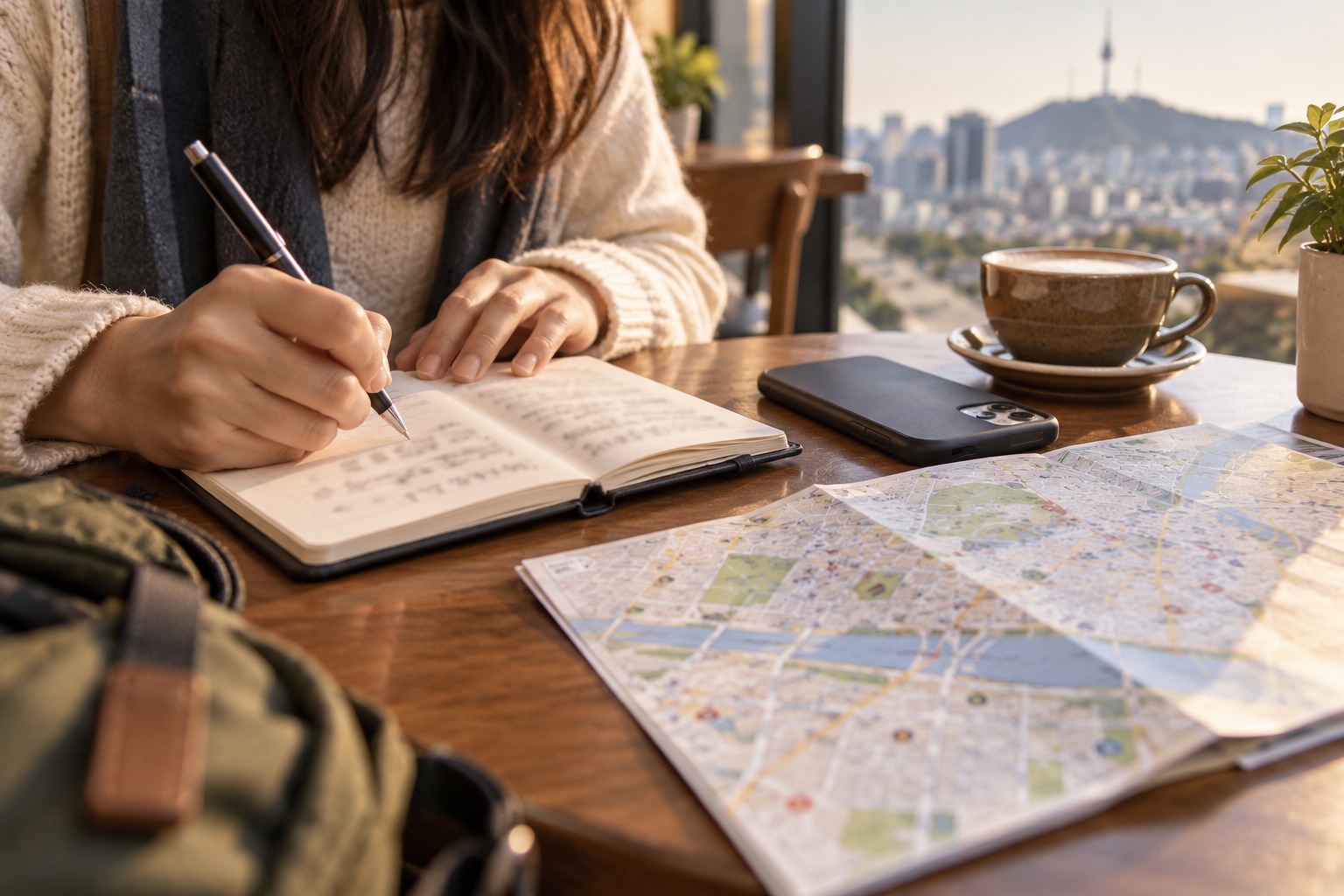
Public alerts and weather disruption
Korea can have heavy rain, heat, cold, air-quality issues, crowd-control changes and event disruptions. Public-safety messages may arrive in Korean first, so travelers should have translation support and check official updates when conditions change.
Do not treat social media posts or old travel articles as current emergency guidance.
Internal links for the next decision
Last updated and source-check structure
Last updated: 7 October 2026. App availability, language support, emergency numbers, public alerts, medical access and embassy procedures can change; verify with official providers, local authorities, your insurer or your embassy before relying on them. This page is not an emergency service, legal advice, medical advice or official notice.