

TRAVEL KNOW-HOW
Question answered
How should I prepare money and payment methods for a Korea trip?
Quick answer
Bring at least one internationally usable card, a backup card, and a small cash buffer. Expect many urban card payments to work, but do not rely on one card, one mobile wallet or one transport balance for every situation.
What travelers usually get wrong
- They assume mobile wallet acceptance equals card acceptance.
- They carry no cash for small shops, deposits or transport-card top-ups.
- They treat tax refund as a guaranteed discount before checking eligibility and paperwork.
Before you go
- Tell your bank you will travel if your card issuer still uses travel notices.
- Keep receipts for larger purchases until you know whether tax refund applies.
- Separate emergency cash from daily spending cash.
Cards are common, but backups matter
Seoul is card-friendly, but foreign-card reliability can vary by issuer, terminal and merchant category. A second card reduces the chance that one bank decision blocks your day.
Hotels and rentals may also treat deposits differently from normal purchases, so keep available balance in mind.
Tax refund is paperwork, not a promise
Tax refund depends on shop participation, purchase amount, product type, passport details and export procedure. Treat it as a possible after-step, not a price reduction you can count on at the shelf.
For shopping planning, final price, refund eligibility, return rules and warranty terms all need source confirmation.
A payment plan for your first day
Think through the first few purchases before you land: your route from the airport, something to eat, and any accommodation deposit. Keep one usable payment method within reach and a backup separately. A card that works at a hotel may still fail at a different terminal, so check your available balance and your issuer’s overseas-use settings before departure.
At a busy counter, ask whether your intended payment method is accepted before ordering. If a transaction fails, ask the merchant whether a charge was authorised before trying again. Keep the receipt or cancellation slip and compare it with your bank’s transaction record later. This is a practical way to avoid confusing a declined payment with a temporary authorisation.

Won or your home currency?
When a payment terminal offers your home currency, it may be offering dynamic currency conversion. Visa explains that this choice can include a conversion rate and additional fees. Read the displayed terms before choosing; do not assume that a familiar currency means a lower final cost. Your card issuer’s foreign-transaction terms can still matter.
If the rate and fees are unclear, ask for the details instead of letting someone choose for you. Visa advises declining the conversion offer when the required information is missing or you are pressured to accept it. Keep the receipt so you can check which currency was used. Read Visa’s explanation of currency conversion.
Keep a small, useful cash reserve
The Korea Tourism Organization identifies the Korean won as the local currency and notes that credit cards are widely accepted at major hotels, department stores and general shops. That does not make every merchant or foreign card identical. Plan a modest cash reserve around the places you actually expect to visit, instead of assuming that every payment will work the same way.
For currency exchange, use a bank or an authorised exchange service and check the quoted rate and any fees before handing over money. Count what you receive and keep the transaction record. Check VISITKOREA’s currency and exchange guidance.
Five minutes of organisation after shopping
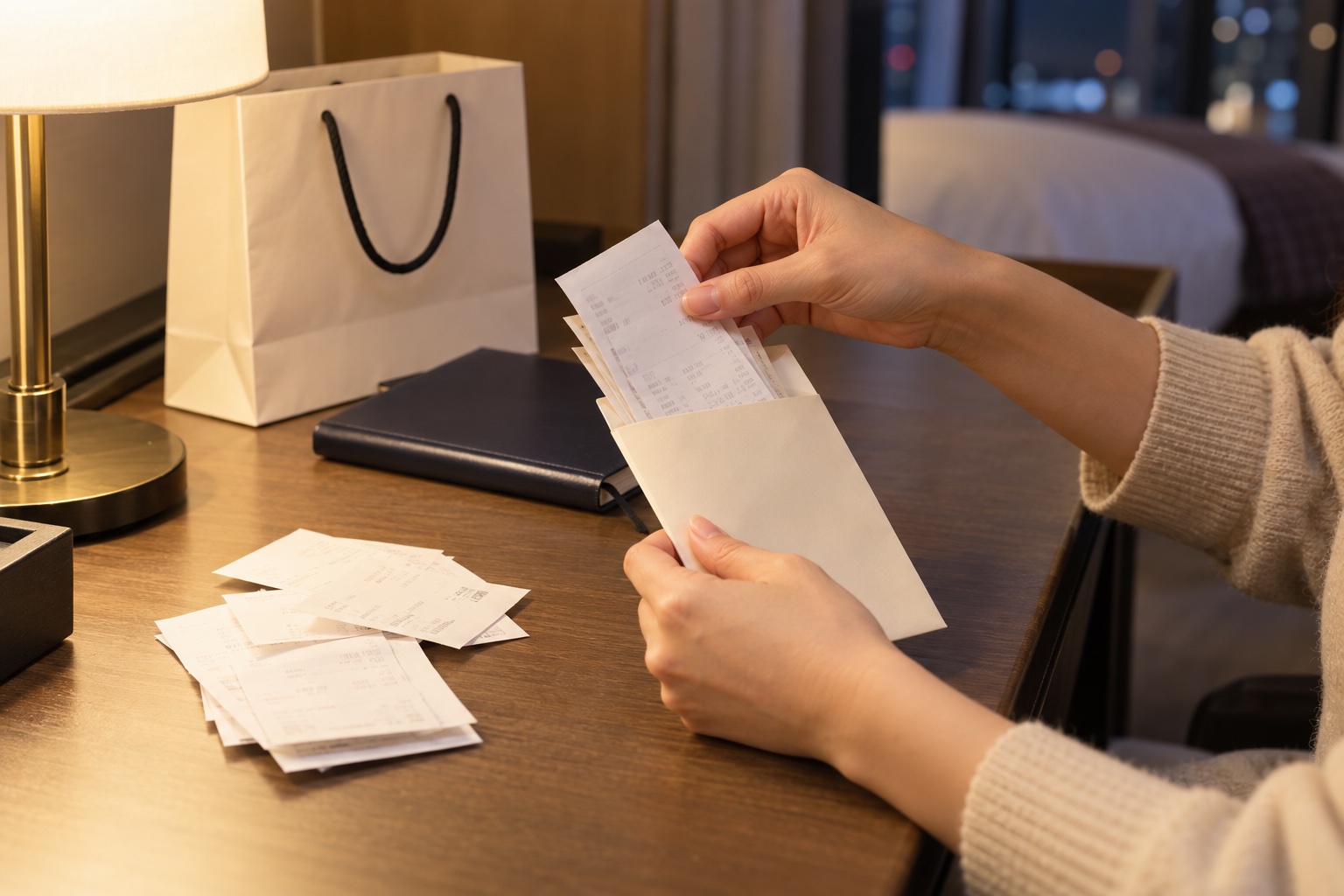
Before receipts disappear into bags, group them by shop and keep the purchase date, item and payment record together. If a return or refund becomes necessary, start with the seller’s published process and explain the specific purchase. Do not assume that an ordinary sales receipt is itself proof of tourist tax-refund eligibility.
Before leaving Korea, check unresolved purchases and any documents the relevant refund provider asks you to present. Keep sensitive payment and identity information private. A useful travel note contains the provider’s official contact route and your own reference, not a photograph of your complete card details.
Internal links for the next decision
Last updated and source-check structure
Last updated: 7 October 2026. live operator timetables, fares, opening rules and financial terms must be rechecked at the original source before travel. This page is not a ticket, booking, payment or official transport notice.