
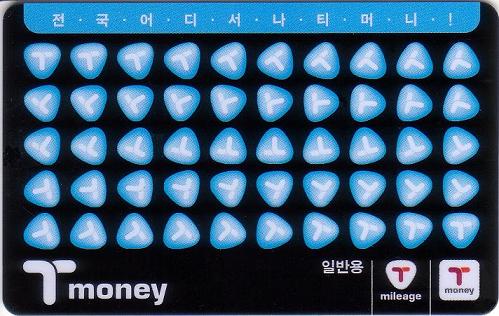
For most visitors, an ordinary Tmoney card from a convenience store is the simplest way to pay for Seoul's subway and buses. Load enough for the journeys you expect, tap it on every gate and bus, and collect what is left before you fly home. The card itself costs 3,000 to 5,000 won and that money does not come back. An adult subway ride starts at 1,550 won. That is the short version, and the rest of this guide takes the card in the order you will use it. Why this card? I have lived in Korea for close to thirty years, and the thing I would still choose for a visitor is flexibility: a pass needs recalculating every time your plans change, and a balance lets you concentrate on the journey. Do not count on tapping a foreign card at the gate. Seoul's March 2026 announcement is about buying tickets and passes at machines.
Buying it
Convenience stores such as GS25, CU, 7-Eleven and Emart24 sell the card, and so does Tmoney Town at Seoul Station. VISITKOREA also lists information centres at stations on Seoul subway Lines 1 to 8. Ask the cashier to separate the card's price from the money you are loading, since the purchase price is not available for rides. Designs and prices vary.
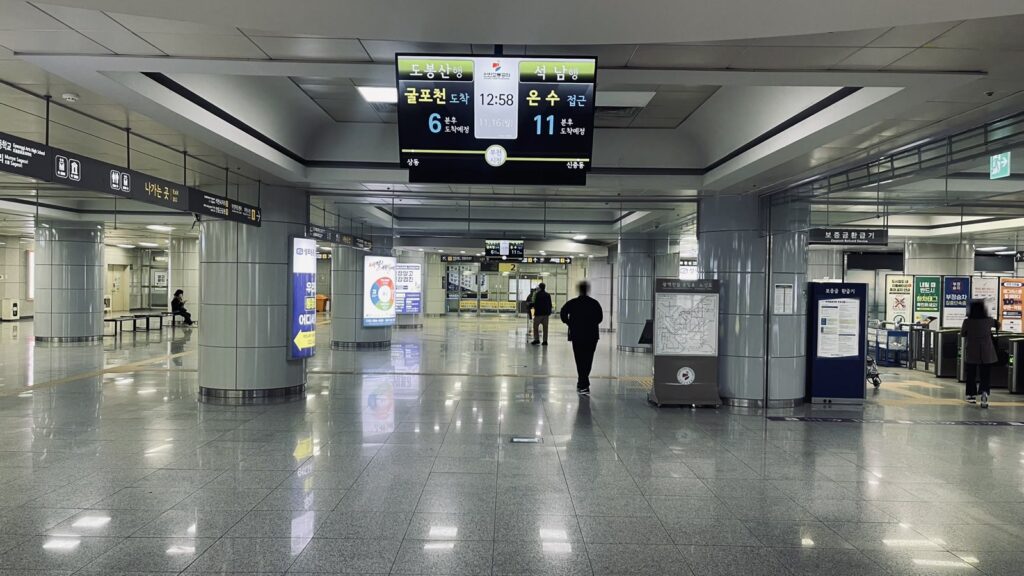
For a family, sort out the fare category at purchase, not at a gate. Children and youths up to 18 get the discounted fare only once a date of birth is registered, which you can do when buying or later at a convenience store. Do not swap discounted cards between adults and children.
Loading it
Tmoney's own guide sets the rules: top up in units of 1,000 won, from 1,000 to 90,000 won at a time, up to a balance of 500,000 won. You need won in cash. Some machines and products take other payment, but do not count on an overseas bank card for an ordinary physical-card recharge. Check the machine or counter for the method and any fee.
The part that wears visitors down is not the fare but repeatedly stopping to recharge, especially when they need cash first. Finding a convenience store is usually easier than remembering to have cash ready, so one useful recharge beats several tiny ones, without loading the maximum.
A simple sum works: expected journeys multiplied by a realistic fare, plus a small allowance for a change of plan. Ten rides at the base fare would be 15,500 won, though that is only a planning example. Budget an airport train or taxi separately. On a short stay you might load the whole visit at once. On a longer or uncertain one, load several days and reassess. Fewer top-ups do not reduce currency-exchange fees, which depend on how you got your won.
- Choose an amount and ask for a Tmoney recharge, or select the recharge option on the machine.
- Keep the card on the reader until it finishes.
- Check the displayed balance and keep the receipt until the credit is confirmed.
- If money was taken but the balance looks unchanged, ask staff before paying again.

Topping up without cash: what works and what is unconfirmed
Plan on cash for a plastic card. Tmoney's guide says to present the card and Korean won at a sales point, and a shop that takes your credit card for purchases may still not reload a Tmoney card with it. Newer options exist, each with its own conditions:
- Ticket machines in the subway. Since 17 March 2026, 440 new machines at 273 stations on Lines 1 to 8 accept overseas Visa and Mastercard cards for fares. The Korea Herald ties this to the Seoul Climate Card and short-term passes, with a 3.7% fee on overseas cards. It is not confirmed that they reload an ordinary Tmoney card, so keep cash until you have tried one.
- iPhone. The Mastercard announcement said visitors could install the MobileTmoney app, register, and top up in Apple Wallet with a Mastercard. It named only Mastercard, and I have not reopened it since it was published.
- Android. The same announcement pointed to the KOREA TOUR CARD app, also topped up by Mastercard.
I would not leave the airport relying on any of these until I had seen the top-up work once. A card that cannot be topped up at the gate is the situation that sends people to a convenience store in a hurry.
Tapping it
Tap the same card on every leg of a connected journey, on both boarding and leaving. On the subway that means the entry and exit gates, and on a bus the boarding and alighting readers. Take the card out of a wallet full of contactless cards so you know which one was read.
| Seoul subway base fare | Transport card | Before 06:30 with card | Single-ride ticket |
|---|---|---|---|
| Adult | 1,550 won | 1,240 won | 1,650 won |
| Youth | 900 won | 720 won | 1,650 won |
| Child | 550 won | 440 won | 550 won |
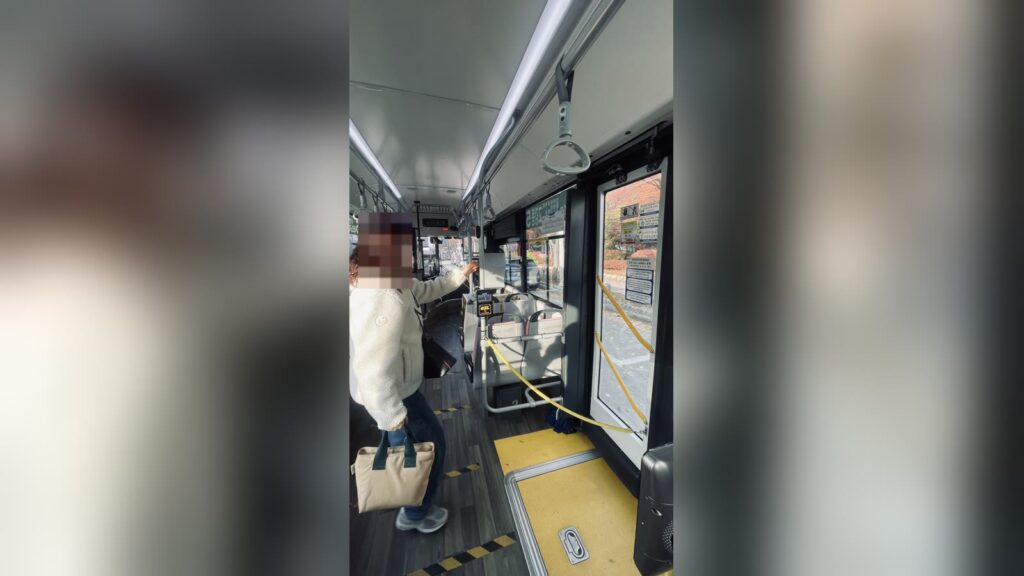
The base fare covers 10 km, with 100 won more for each extra 5 km. You pay the highest base fare among the modes you use, and a transfer is discounted provided the next leg starts within 30 minutes of the last one, or 60 minutes from 21:00 to 07:00. Distance still counts, so a transfer does not make every further ride free. What matters is that each tap registers.
If a gate rejects the card, stop and ask staff. Do not keep tapping or follow someone through. First check the balance and whether your last exit registered. A small payment problem should not become the most stressful part of the journey.
When bags or a tiring walk make you switch to a taxi, the card can be useful there too, on accepting taxis. Confirm acceptance and your balance first, and see our taxi guide for the alternatives.
Getting your money back
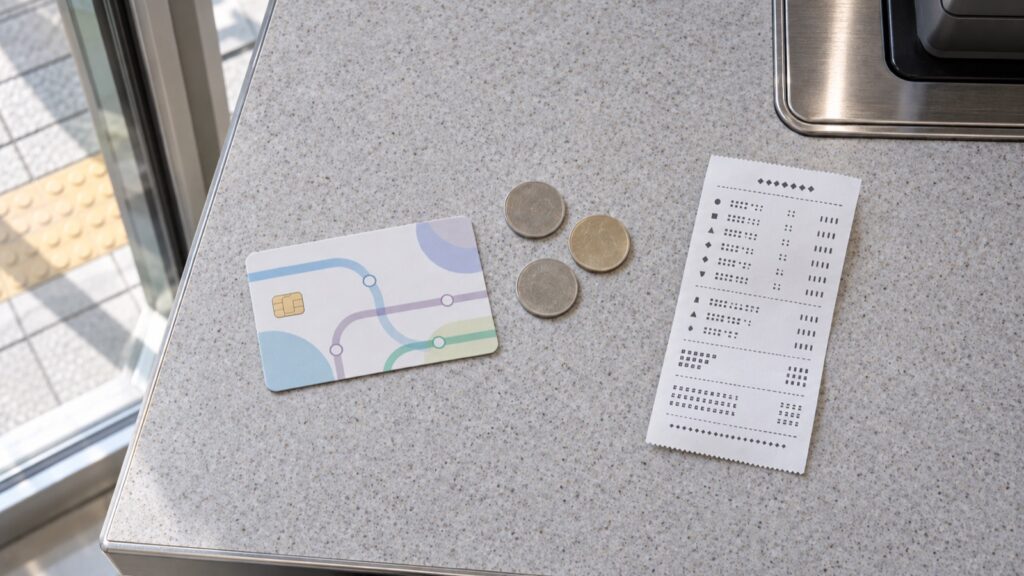
A convenience store will refund what is left on the card, and it is not hard. Three separate things are involved, though: the balance, the card's purchase price and a service fee. The store limits are lower than you might expect, so check your balance first.
| Question | Answer |
|---|---|
| Do I get the card price back? | No. Tmoney refunds the balance only, in won cash. |
| Is there a fee? | Yes, 500 won at stores, stations and ATMs. Tmoney's Korean refund table shows no fee at Tmoney Town up to 500,000 won a month, while its English guide quotes 500 won without exception, so allow for it. |
| Small balance | A convenience store. GS25 takes under 20,000 won, 7-Eleven and independent stores 20,000 won or less, CU and Emart24 30,000 won or less. |
| Above the store limit, up to 50,000 won | Tmoney's table confirms partial refunds at Seoul-area subway service centres, but does not say they refund a whole balance. The safe route: take part of it back there, in units of 10,000 won, then collect the rest at a convenience store. Each refund has its own fee. |
| Balance over 50,000 won | Tmoney Town: Seoul City Tower 1F, Seoul Station Exit 10. Bring ID. From 100,000 won the money goes to a bank account after 18:00 on the next working day, and you bring a bankbook copy too, which does not suit someone flying home. Between 50,000 and 100,000 won, the table does not say whether you get cash or a bank payment, so call before you go. Tmoney also lists bank ATMs, but they only pay into an account at that bank. |
| Part of the balance | Tmoney Town and subway Tmoney service centres, 10,000 to 50,000 won in units of 10,000 won, for plate-type cards only. |
| Who to call | 120, then press 9, for foreign-language help. Tmoney's Korean line is 1644-0088, weekdays 09:00 to 18:00. |
Early in the trip you want fewer interruptions, and near the end you want to avoid adding money you will not use. Check your balance before your final sightseeing day and keep enough for the journeys still ahead. With a special card, a damaged card or a large balance, ask Tmoney directly, and do not leave it until just before your flight. The last section of this guide covers other cards and a damaged card.
Tmoney, a pass, or a single ticket
A Tmoney balance pays as you travel, while a time-limited pass buys a defined entitlement. I have not used the Climate Card myself, so here is only its published offer. The short-term pass costs 5,000 won for 1 day, 8,000 for 2, 10,000 for 3, 15,000 for 5 and 20,000 for 7, plus 3,000 won for a physical card. It covers subways within Seoul and Seoul-licensed buses, but not the Sinbundang Line, stations outside Seoul, or express and airport buses. Compare it against your actual routes. Climate Card or Tmoney goes into the detail.
| Your situation | What to choose |
|---|---|
| Several days of subway and bus travel, with plans that may change | Ordinary Tmoney with a realistic travel budget. Flexibility matters more to me than chasing a pass saving. |
| A fixed Seoul-only itinerary with frequent rides | Compare the current short-term pass coverage and price against the actual itinerary. |
| Only one subway journey | Compare a single-journey ticket with the cost of buying a new card. AREX, for one, charges a 500 won refundable deposit on its single-journey card. |
| Heavy bags, stairs or a destination far from a station | Compare a bus stop near the destination or a taxi. Owning a transit card is no reason to choose an inconvenient route. |
| The last day of the trip | Check the remaining journeys before topping up, and sort out the refund while there is time to reach an outlet. |
View the official Seoul transport guide and map ↗
I recommend the subway for most trips within Seoul when you are not carrying heavy bags and your destination is reasonably close to a station. I value the predictable journey time as much as the fare.
Other cards, and a damaged one
Check which product you are holding first, because the money paid for the card, a transport balance, a shopping wallet and a period pass are separate things. If your card covers your journeys, knowing its balance is worth more than collecting another. Getting a single-journey ticket deposit back is not a Tmoney refund.
| What you hold | Getting the money out |
|---|---|
| Tmoney transport balance | The refund table above. The card price is not refunded. |
| WOWPASS | Withdraw the balance as won cash at a WOWPASS kiosk |
| Climate Card | VISITKOREA says foreigners without a Korean bank account must visit Tmoney headquarters, and advises spending the balance before you leave. See Climate Card or Tmoney. |
| EZL Card | Convenience stores refund under 20,000 won only |
With a product that combines transport and shopping, inspect both balances, since refunding one does not empty the other. If a card cannot be read, stop treating it as a normal cash refund and ask the operator for the damaged-card process: Tmoney's customer centre is on 1644-0088, and the Dasan call centre takes foreign-language calls on 120, press 9. A lost card is different again, so do not assume an anonymous balance can be recovered.
Other things people ask
Do I need a Korean bank account?
For an ordinary prepaid Tmoney card, no. Mobile and special payment products have their own setup requirements.
Does the card cover every airport or intercity train?
No. Check the particular service and ticket requirement, since a Tmoney logo on city transport does not replace a reserved train ticket. The AREX Express, for instance, sells its own ticket.
Pages behind this advice
Pages reopened and read on 21 November 2026. The Mastercard announcement is not in this list: the text above reports only what that announcement said.
- Seoul Metropolitan Government: subway fares and integrated transfers
- VISITKOREA: transportation cards and refund guidance
- Tmoney: product, recharge and refund guidance
- Tmoney: refund limits by outlet (Korean)
- Seoul Metropolitan Government: current Climate Card conditions
- AREX: all-stop fares and single-journey card
- Korea.net: overseas-card ticket machines on Seoul subway Lines 1 to 8
- The Korea Herald: overseas cards and the Climate Card