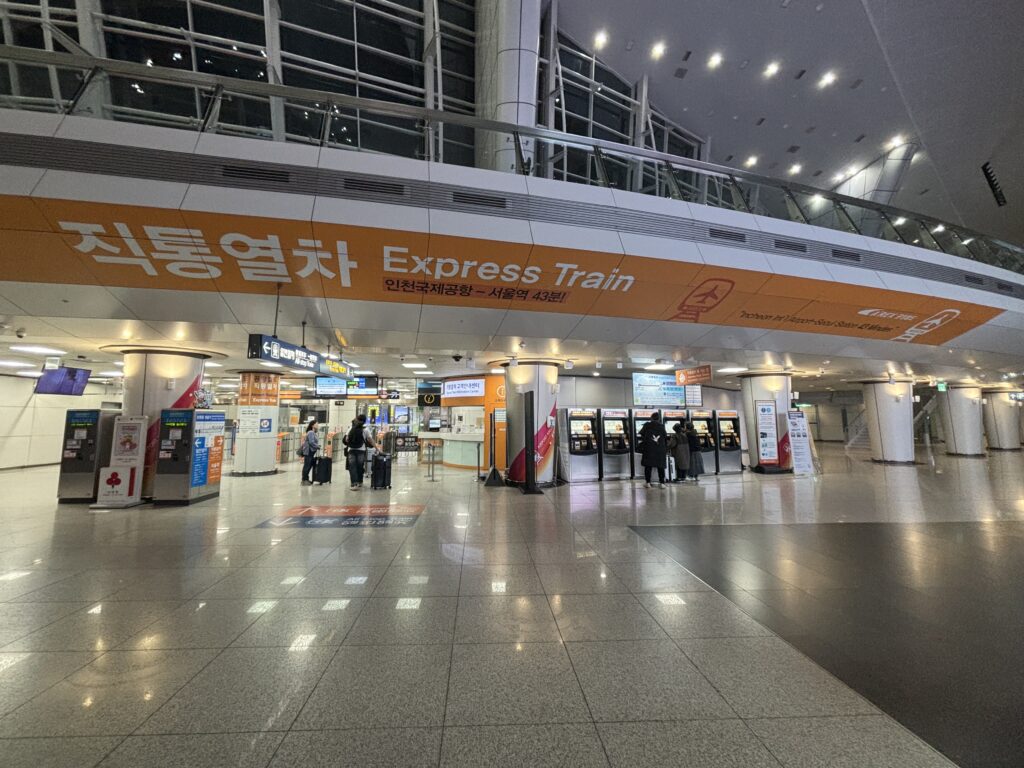
Find your neighbourhood first, because that settles the route. If you are near Seoul Station, take the AREX Express: 43 minutes from Terminal 1, 51 from Terminal 2, 13,000 won at the current discounted adult fare. Near an AREX stop such as Gongdeok or Hongik University, take the much cheaper all-stop train.
For most other districts, a limousine bus for 17,000 or 18,000 won will put you closer to the door with fewer stairs. A taxi goes all the way for far more: Seoul's flat-fare International Taxi costs 70,000 to 95,000 won by district for a sedan, and my Kakao T estimate for a taxi from Jamsil to the airport was 65,300 won.
When my bags are light, I come in on the airport railroad, which I think is really well set up. Coming to Seoul Station, I take the Express. If I am going somewhere else, or the timing does not work, I choose between the Express and the all-stop at that point. Luggage changes the answer. I used to take AREX even with bags, because money mattered more then. Now, with luggage, I take a taxi.
Airport buses by neighbourhood
These are the airport's own route listings. Times are first and last departures from Terminal 1. From Terminal 2, the last bus on each of these routes leaves 20 minutes earlier.
| You are staying in | Bus | Adult fare | From T1 |
|---|---|---|---|
| Seoul Station, Myeongdong, Dongdaemun | 6001 | 17,000 won | 05:29–23:09 |
| Hongdae, Sinchon, Gwanghwamun, Jongno | 6002 | 17,000 won | 05:34–23:29 |
| Mapo, Gongdeok, Euljiro, Myeongdong | 6015 | 17,000 won | 05:39–23:19 |
| Gwanghwamun, City Hall, Myeongdong | 6701 | 18,000 won | 05:35–22:25 |
| Seoul Station, Itaewon, Namsan, Dongdaemun | 6702 | 18,000 won | 06:05–23:05 |
| Sinsa, Gangnam Station, Yangjae | 6009 | 17,000 won | 05:40–23:12 |
| Gangnam Express Terminal, Gangnam Station, Yeoksam | 6020 | 17,000 won | 06:15–23:02 |
| Yeoksam, Seolleung, COEX | 6703 | 18,000 won | 06:15–22:55 |
| Samseong and COEX, nonstop | 6103 | 18,000 won | 06:00–23:30 |
| Apgujeong, COEX, Jamsil | 6006 | 17,000 won | 06:20–23:10 |
| Jamsil, Gangbyeon, Gwangnaru | 6705A | 18,000 won | 05:20–23:15 |
| Yeongdeungpo, Yeouido | 6007 | 17,000 won | 06:59–22:54 |
At Terminal 1, Seoul buses board outside exits 3 to 7, and ticket booths are inside by exits 4 and 9 and outside near several others. At Terminal 2, they leave from the transportation centre on B1. The route page gives the exact stop number for each bus.
The bus's trade-off is the wait. I find it useful when its departure fits my arrival. When it does not, you may sit waiting. Check the next usable service after you collect your bags, since your flight's arrival time will not match a bus. Road traffic also makes its city arrival less predictable than the train's.
What you get in return can be a stop near your accommodation, with no rail transfer and no difficult walk. Compare the exact stop and the side of the street, especially if your hotel's name is shared by several branches.

AREX: two trains that are not interchangeable

AREX runs two different products, and buying the wrong one can send you past your stop.
| Express | All-stop | |
|---|---|---|
| Goes to | Seoul Station only | Every AREX station, including Hongik University and Gongdeok |
| Time to Seoul Station | 43 min from T1, 51 min from T2 | 59 min from T1, 66 min from T2; some trains take 2–6 minutes longer |
| Adult fare to Seoul Station | 13,000 won discounted (child 9,500 won). The regular fare is 18,500 won from T1 and 19,100 won from T2 | 4,750 won from T1 and 5,350 won from T2 with a transport card |
| Ticket | Separate ticket with a reserved seat | Transport card or single-journey card |
| First and last to Seoul Station | T1 05:24–22:48, T2 05:16–22:40 | T1 05:14–23:38, T2 05:08–23:32. The 23:56 from T1 and 23:50 from T2 stop at Digital Media City |
To me the two trains do not feel very different. On AREX's figures, the Express saves 16 minutes from T1 and 15 from T2, and costs 8,250 or 7,650 won more. AREX's weekday and holiday tables show the same first and last trains.
A single-journey card on the all-stop line adds 100 won to the fare, with a 500 won deposit returned at your destination. If you are heading to Hongdae or Gongdeok, the Express would carry you past your stop and leave you to come back.
The walk after you get off
Save your hotel's address in Korean as well as the booking language, and find the station exit and the lift route before you travel. From my subway experience, stairs are the detail that matters most with heavy luggage. A line change drawn as one small symbol on a map may involve a long walk. Our subway with luggage guide covers this in more detail.
Compare the whole journey, not the ride
Write down the wait, ride, transfer and final walk for two realistic options. A complete bus journey cannot be fairly compared with only the train's station-to-station time. If the bus is soon and its stop is close, it is the easier trip. If the wait is long and the rail route is simple, AREX wins. Saving a little money may not be worthwhile if it means difficult stairs and transfers. If you want a closer comparison, see AREX or airport bus.
| Option | It suits you when | What could change that |
|---|---|---|
| AREX Express | Seoul Station is useful and you want a reserved seat | A complicated onward transfer with bags |
| AREX all-stop | Your destination is near a stop it serves | A long final walk or difficult station access |
| Airport bus | The next departure works and the stop is close | A long wait, traffic or the wrong hotel branch |
| Taxi | Door-to-door travel matters enough to pay more | Vehicle capacity, fare conditions and road delay |
Taxi: what the meter starts at
A standard taxi starts at 4,800 won and a deluxe or 9-seat jumbo at 7,000 won, but the base fare tells you little about the total from the airport. Standard Seoul taxis add 20% from 22:00 to 23:00 and from 02:00 to 04:00, and 40% from 23:00 to 02:00. Deluxe and jumbo taxis add 20% from 22:00 to 04:00. International and Smart taxis have flat fares into Seoul. Seoul's table for the International Taxi runs from 70,000 to 95,000 won by district for a sedan, and 100,000 to 140,000 won for an SUV, van or deluxe car. A standard metered taxi has no fixed total. My Kakao T estimate from Jamsil to the airport on a November morning was 65,300 won, and tolls can be added. For stand numbers and fares by district, see our Seoul taxi guide.
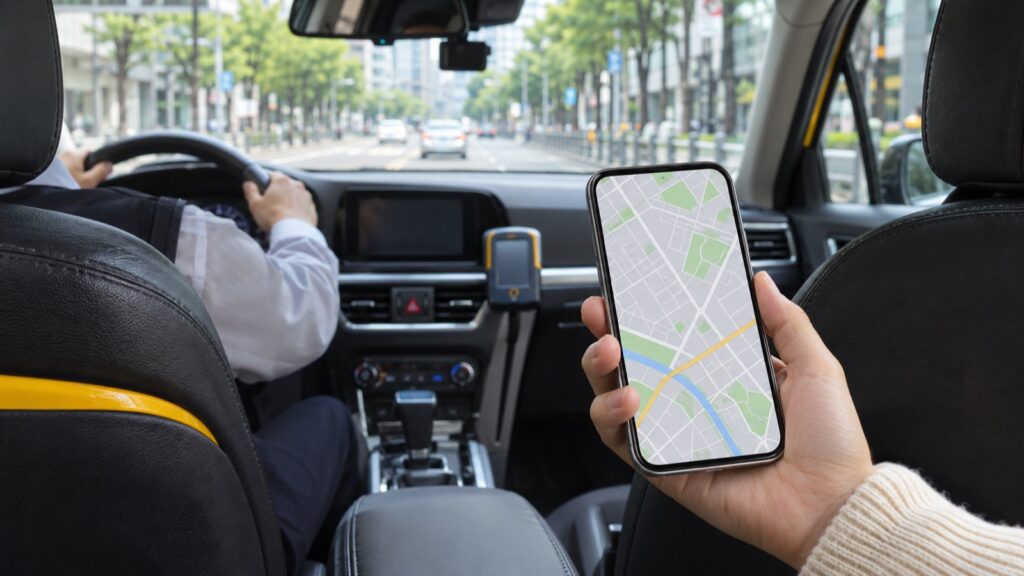
Use a designated taxi stand or a properly identified booking service, and show the full address. Anyone who approaches you with a ride offer may be a call van posing as a taxi, and the airport warns that these overcharge. With a group or large suitcases, confirm that the vehicle has room before agreeing. Ask whether the trip runs on the meter or at a confirmed price, and whether tolls and surcharges are included.
Keep the receipt and vehicle details. That is my advice for lost belongings too, because the time, vehicle and route make the journey easier to trace, though nothing guarantees that a lost item will be recovered.
If you land late
A scheduled landing time is not the time you can board anything. The airport tells passengers to allow 1 to 2 hours for immigration when booking onward transport. Look for the last connection that reaches your destination, not merely the last vehicle leaving the airport.
If that is getting tight, choose your fallback before you leave the terminal. Night buses N6000, N6002, N6701 and N6703 serve parts of Seoul, listed on the airport's late-night pages, and a taxi is the other option. Our after-midnight guide goes through them. Tell the hotel if check-in depends on your arrival time, since not every property has a staffed desk all night.
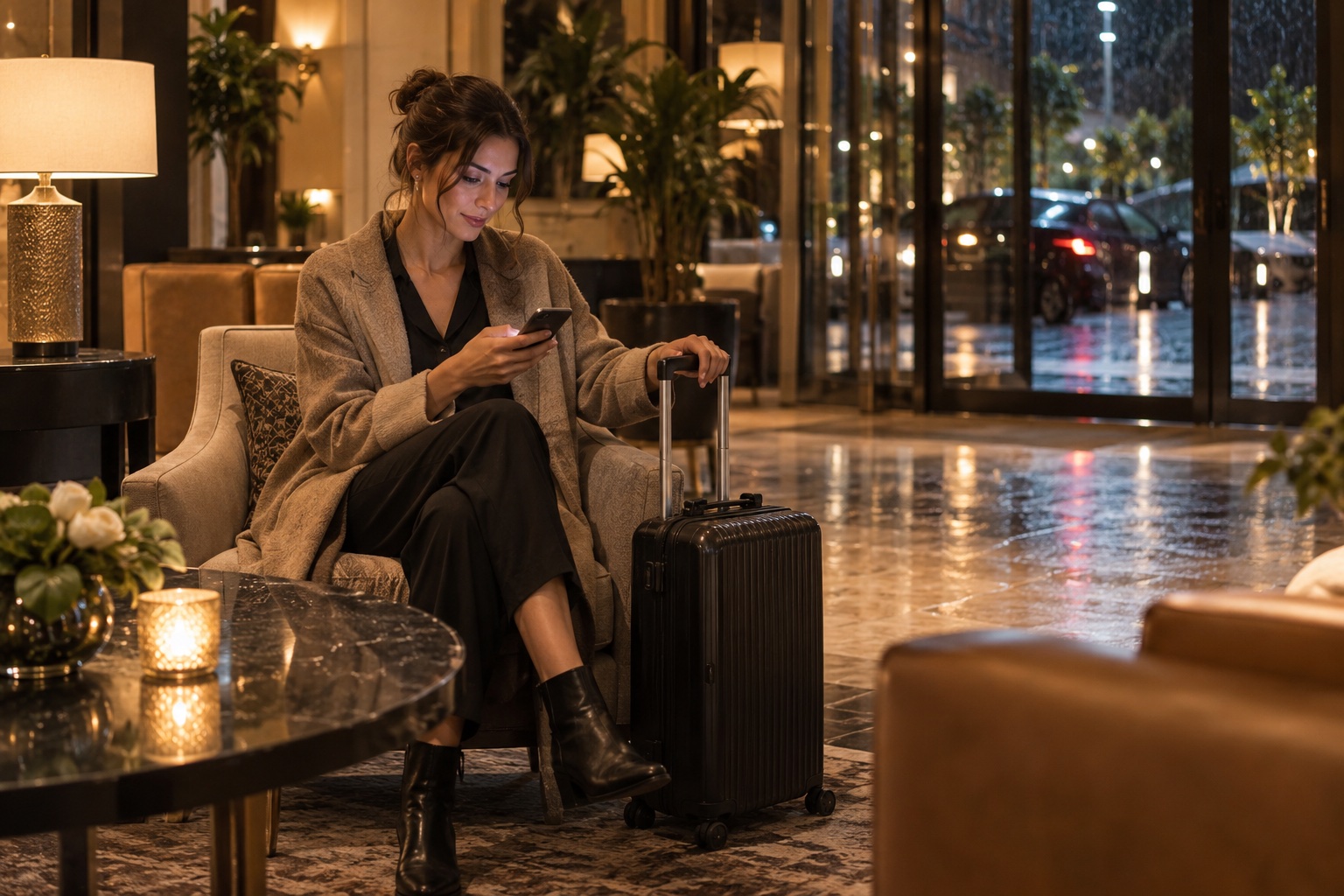
Save the address and arrival instructions offline. You do not want the final door or entry code to depend on finding Wi-Fi while carrying bags.
Two questions people ask on arrival
Should I plan sightseeing straight after landing?
Keep it optional until you know how the arrival goes. Reaching the accommodation, managing bags and understanding the neighbourhood can be enough for the first part of the day. A delayed flight should not set off a chain of missed reservations.
Can I use the same ticket on both AREX services?
No. Treat them separately, and check the product before paying and the terminal before boarding.
Fares and routes: where they come from
Reviewed 7 November 2026. Bus fares and first and last times were read from the airport's route search, and AREX fares from AREX's own pages. They change, so confirm them on the day.
- AREX: Express service and current listed fares
- AREX: all-stop fares by station pair
- AREX: Express timetable
- AREX: all-stop journey times
- AREX: all-stop timetable from T1
- AREX: all-stop timetable from T2
- Incheon Airport: bus search
- Incheon Airport: bus information
- Incheon Airport: late-night buses
- Incheon Airport: taxi information
Booking a transfer or activity

Affiliate link · activities and travel services
Explore Klook
Compare attractions, transfers and travel services on Klook. Check the exact product page before paying.
Explore Klook ↗
Affiliate link · experiences
Browse KKday experiences
Use KKday for Korea experiences and essentials, then confirm inclusions, redemption and cancellation rules.
Browse KKday ↗Koreafolio may earn a commission from qualifying purchases through labelled affiliate links. No booking is made on Koreafolio. Read how our links work.