
After living in Korea for close to thirty years, I do not think a visitor needs to approach an ordinary meal or subway ride as an etiquette examination. Notice the people sharing the space, keep your voice considerate, and ask when a rule affects your choice. That is more useful than trying to perform every custom perfectly. Visit Seoul says the same thing from the official side: visitors' small mistakes are generally understood.
Two kinds of thing get mixed up. Speaking quietly is a courtesy. A restaurant's minimum order or Bukchon's visiting hours are conditions, and a friendly manner will not change them. The first you can do imperfectly. The second you need to check.
Sitting down to eat
With Korean hosts or older people at the table, a few habits go a long way. All of these come from Visit Seoul's guidance:
- Start once the eldest at the table begins eating.
- Eat rice with a spoon, and never leave chopsticks or a spoon standing up in the bowl.
- Use utensils rather than fingers, except when wrapping food in lettuce or cabbage.
- When you finish, put the chopsticks and spoon back where they started.
Getting help is easier than visitors expect. My own experience is that it is usually straightforward: I look for a call button on the table and press it when I need something. If there is none, I raise my hand or make a small gesture. Do not wait indefinitely for staff to notice you, and do not shout across a quiet room either.
I normally plan on one order for each person, though restaurants differ. A shared dish may have a minimum number of portions, and a child's order depends on the place. If your group only wants a small meal, ask about the minimum before you sit down.
I do not add a routine tip to an ordinary restaurant bill in Korea. I pay the stated amount and say thank you. Tipping is not customary here. If a particular service publishes a separate charge, read it, and ask before you assume an additional side dish is free.
When someone pours you a drink
Visit Seoul's etiquette article gives the three rules visitors meet most: do not pour your own drink, hold the bottle or glass with two hands when pouring and receiving, and let the most senior person drink first. With a host or an older colleague, watch the table and follow it.
On the subway
Seoul Metro's ten rules are short and practical. These are the ones that catch visitors:
- Let passengers get off before you board, and do not push on a crowded train.
- Offer your seat to pregnant women, people with children and the physically disadvantaged.
- Keep your phone on vibrate and your voice down.
- Keep to the right in stations, and do not walk or run on the escalator.
I usually recommend the subway when a destination is practical to reach and you are not carrying much. The stairs and bags that make a journey tiring also make it harder to share a crowded carriage, so keep bags close and move clear of the doorway when you can. Respect marked priority seating, but you cannot judge someone's need for a seat by appearance, so do not turn it into an argument with another passenger.
Check your route away from the gate or the stair landing. Predictable travel is one reason I like the subway, and that advantage disappears if you stop dead in a busy entrance to decide where to go. If you need help, ask station staff rather than silently struggling with a bag on the stairs.
At the door
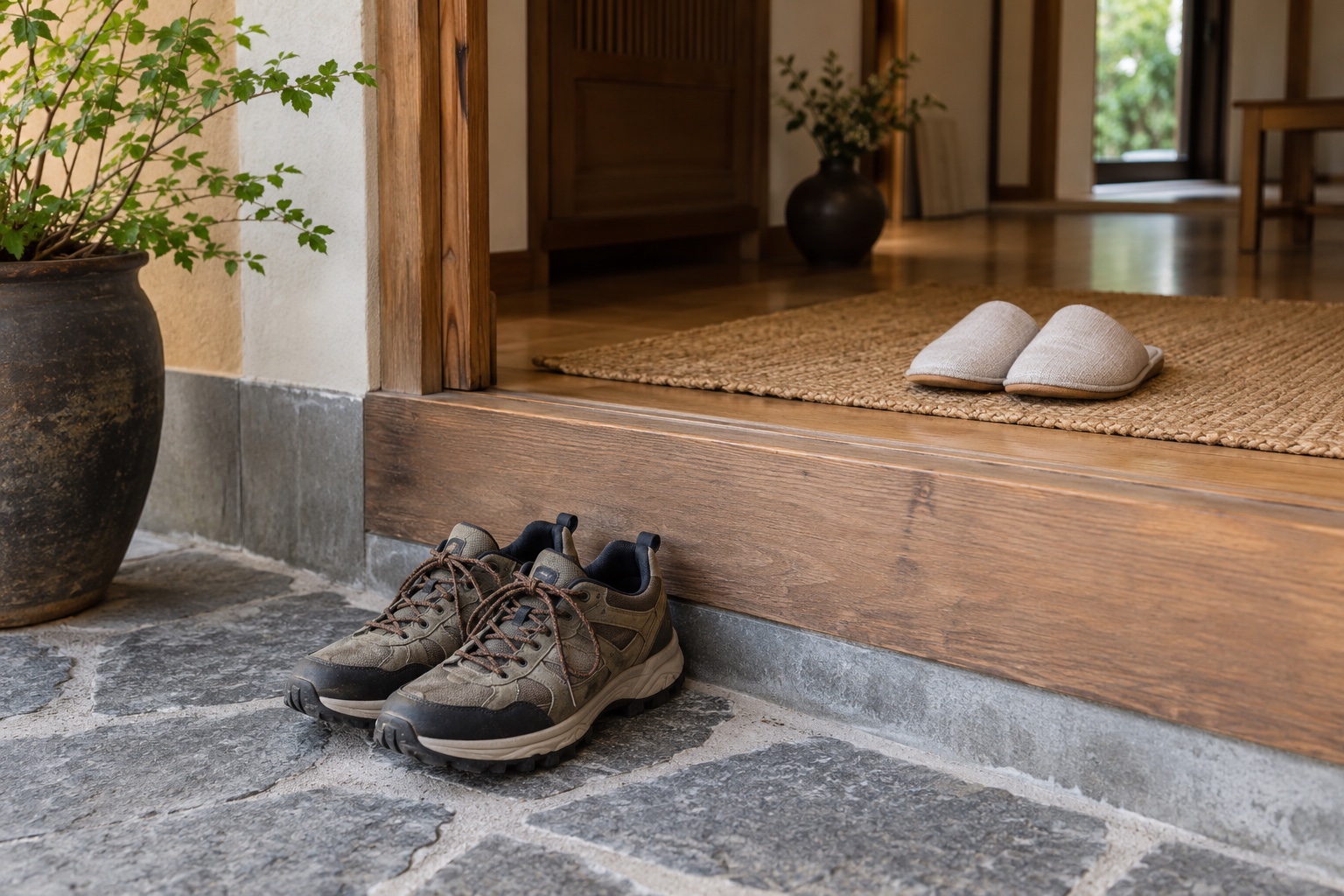
Visit Seoul says to take your shoes off at the door of any residence, temple or guesthouse. In practice, look for shoes, a shoe rack, a raised floor or a sign first, because at a temple or guesthouse the boundary may be an interior room and not the whole property. If it is unclear, ask the host or staff.
For an introduction, a short bow that is really a nod is enough. Give and receive things with both hands, and avoid pointing. Keep your manner polite and unhurried. Nobody needs a dramatic bow, and an imperfect movement will not offend everyone. In a formal setting, follow the host's lead.
Bukchon has rules, and a fine
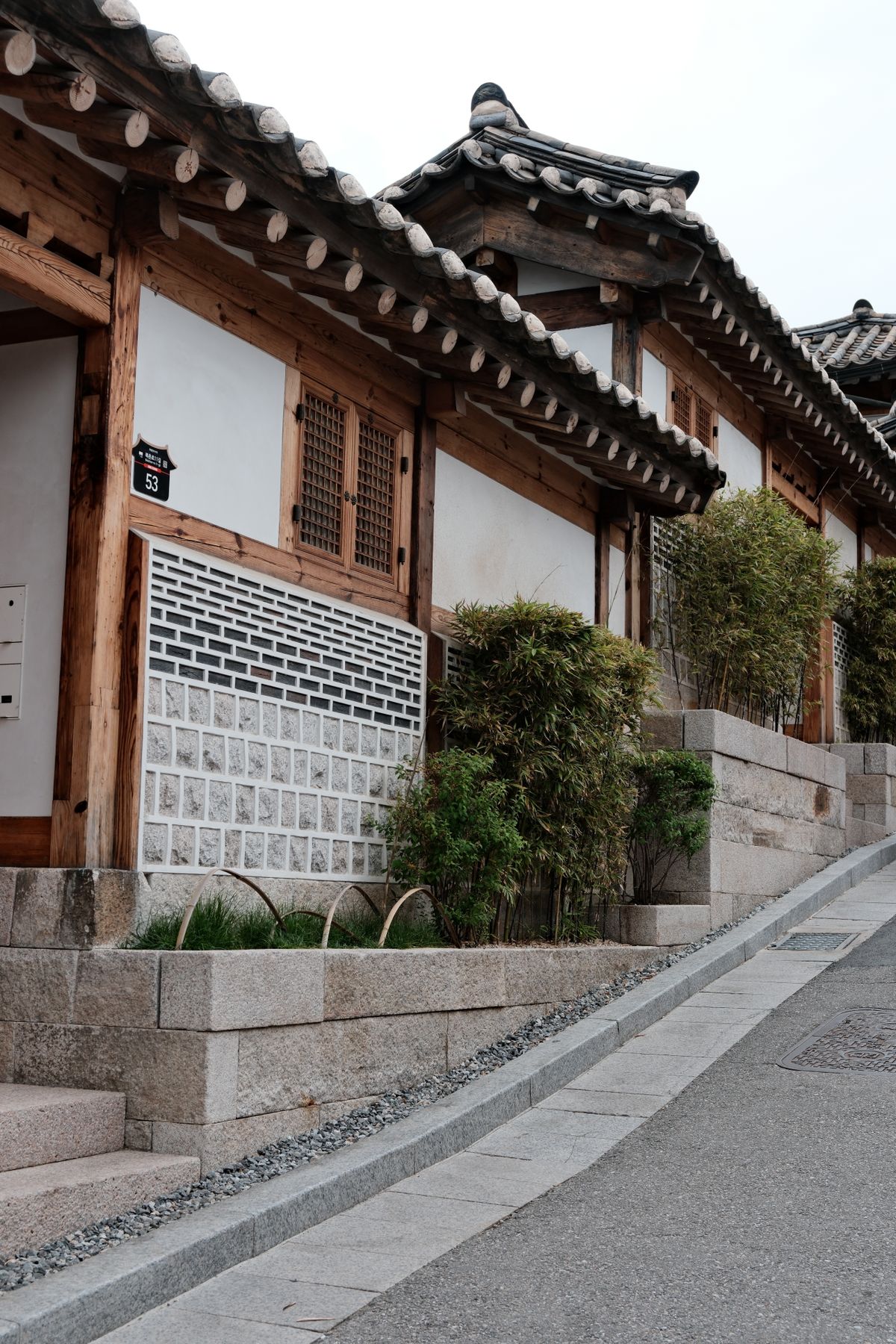
I like the historic side of northern Seoul, but people live in these lanes. The Bukchon-ro 11-gil area is a Special Management Area, the Red Zone, and tourists may visit only between 10:00 and 17:00. Seoul's notice (a Chinese-language page; English report here) sets a fine of 100,000 won for tourists there outside those hours, enforced since 1 March 2025. The nearby orange and yellow zones have no visiting-hour limit but are under extra guidance and monitoring. These pages were checked on 7 November 2026, and posted signs on the street come first. If you arrive outside the permitted hours, change your route, even if the street looks empty.
Visit Seoul also asks visitors to keep noise down, not to litter, to keep groups to 10 people or fewer, and not to use microphones, megaphones or loudspeakers. Do not photograph or film the inside of a house, even if the door is open. I would make that choice without a sign, because the person living there did not agree to appear in a holiday photograph. If a picture means blocking a gate or leaning into private space, give up that shot and find another view.
Courtesy or condition?
| Situation | What it is | What to do |
|---|---|---|
| You need restaurant staff | Courtesy | Use the call button or raise a hand; keep the request calm |
| A small group wants to share one dish | Condition | Ask about minimum portions before ordering |
| You are entering a traditional indoor space | Condition | Check where shoes come off, or ask the host |
| You want a photo on a residential street | Both | Check the hours, protect privacy, keep entrances open |
| A posted rule is unclear | Condition | Translate or ask; other visitors doing it proves nothing |
Use your phone's translator for a short, specific question. "May I enter here?" is easier to answer than a long explanation of your itinerary. If the answer stays unclear, choose the less intrusive option. Being a visitor gives you a reason to ask, and it gives you no reason to ignore a boundary.
If you get it wrong
Acknowledge it briefly, correct what you can and follow the instruction. Do not turn an ordinary misunderstanding into an argument about what tourists are allowed to do. And do not put off a trip because your Korean is limited. Learn a greeting and a thank-you if you can, but a considerate voice, patience and a clear request do more than repeating a phrase you cannot follow up.