
Seoul Subway with Luggage: When I Take the Train and When I Choose a Taxi
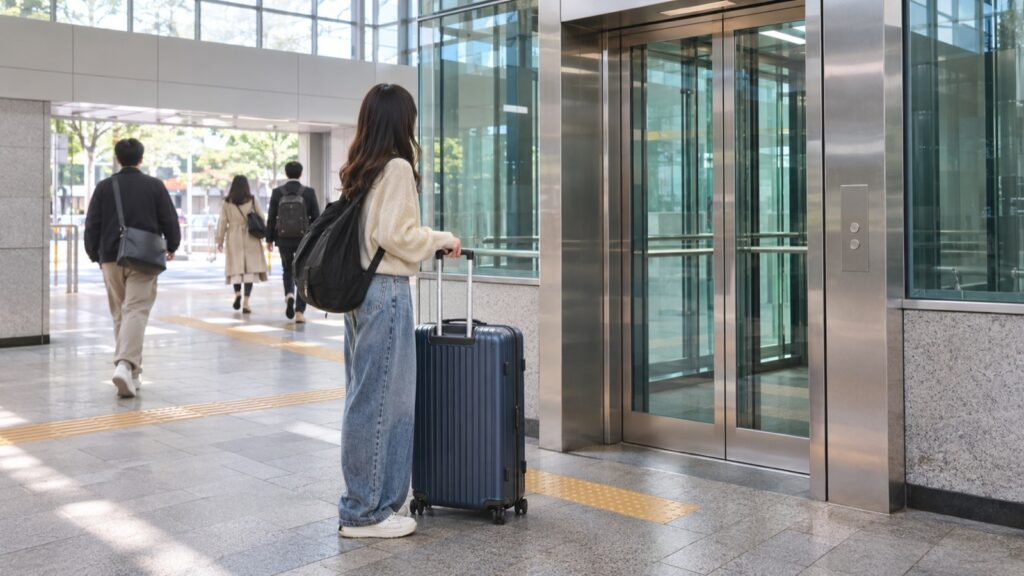
Take the subway if you carry one case you can lift, the hotel route has elevator access, and the selected exit is near your hotel; otherwise compare a taxi or airport bus. Seoul Metro does not allow an item whose three sides add up to 158 cm or more, or one over 32 kg. The tables below price the subway against a taxi for one to four people, so you can see what the extra comfort costs.
| Your situation | Start with |
|---|---|
| Alone, one case you can lift, hotel near an elevator exit | Subway |
| A direct line, but an awkward walk at the end | Subway for the long part, taxi for the last leg, if finding that pickup is really easier |
| Several changes, or more than you can comfortably carry | Taxi, or an airport bus that stops near the hotel |
| Family with several large cases, or an older companion | Taxi or bus, comparing the total for the group |
| Hotel not ready, or a day of sightseeing with the bags | Leave the bags at T-Luggage, below |
| Someone who cannot use stairs at all | Only a confirmed step-free route, door to door |
The money: what the official fares add up to
The subway on a transit card starts at 1,550 won for an adult (the page shows 1,400 won before 28 June 2025; a single-ride paper ticket from a machine costs 100 won more). A regular taxi in the daytime has a base fare of 4,800 won for the first 1.6 km, then 100 won per 131 metres and 100 won per 30 seconds. The all-stop airport train from Incheon Terminal 1 to Seoul Station is 4,750 won on a transit card.
From those three published numbers I worked out two tables. They are my own arithmetic and the taxi figures count the distance fare only, so time fare in traffic, late-night surcharges and any international passenger surcharge would come on top.
| Taxi trip length (daytime) | Base plus distance fare, no time fare |
|---|---|
| 3 km | 5,900 won |
| 5 km | 7,400 won |
| 8 km | 9,700 won |
| 10 km | 11,300 won |
A one-way subway ride is 1,550 won for one person, 3,100 won for two, 4,650 won for three and 6,200 won for four. So a base-fare taxi (4,800 won) already costs less than four separate subway tickets, and a 5 km taxi (about 7,400 won) is close to the price of four tickets. For one person the subway is cheaper at every distance in the table. The rule: the more people share the bags, the closer a taxi gets in price; the heavier the bags, the more that closeness matters.
From Incheon Airport, Seoul publishes fixed-route taxi fares by district: a sedan costs 70,000 to 95,000 won depending on the zone (Seoul Station is in Jung-gu, zone C at 85,000 won). Compared with the all-stop airport train to Seoul Station, the saving is large:
| People | Subway ride in Seoul, card | All-stop airport train to Seoul Station, card | Zone C sedan (85,000 won) minus the train |
|---|---|---|---|
| 1 | 1,550 won | 4,750 won | 80,250 won |
| 2 | 3,100 won | 9,500 won | 75,500 won |
| 3 | 4,650 won | 14,250 won | 70,750 won |
| 4 | 6,200 won | 19,000 won | 66,000 won |
A 66,000 won gap for four people is real money, and it is also the price of two people being unable to lift their bags up a staircase. Decide which matters more for your group, then read the rest of this guide to make the cheaper option easier. The taxi guide has the surcharge rules.
The limits on what you can bring on the train
Seoul Metro’s passenger terms for Lines 1 to 8 (article 36) say that an item whose length, width and height added together reach 158 cm, or one that weighs more than 32 kg, cannot be carried on the train. Wheelchairs, strollers and folded folding bicycles are exceptions. To check a case, measure its three sides in centimetres and add them, including wheels and handle; 158 cm is about 62 inches and 32 kg is about 70 pounds. A very large suitcase can fail the sum, so measure before you leave.
Find the elevator before you choose an exit
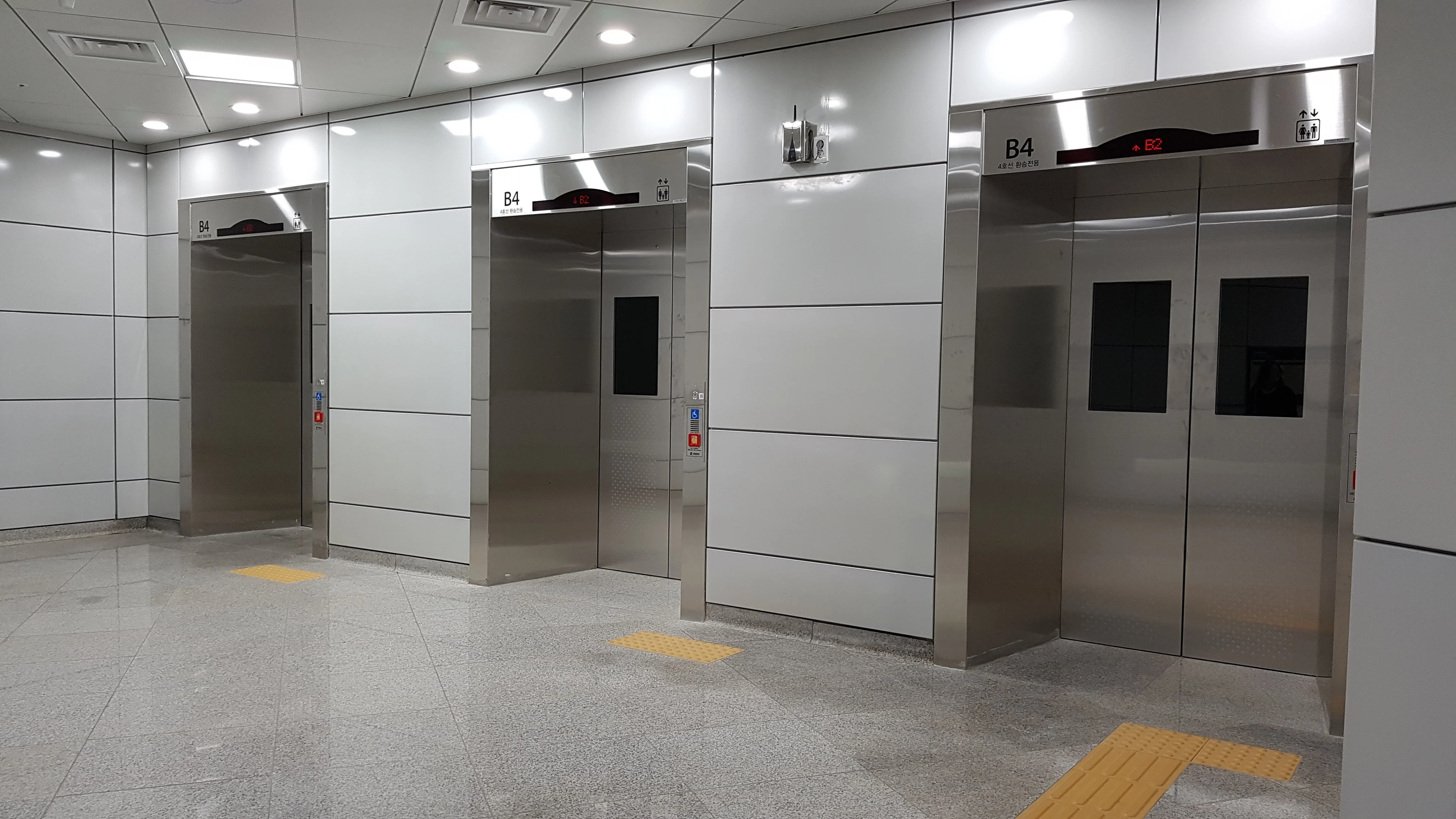
The city’s press release of 29 December 2025 says all 338 stations across 11 lines, which carry about 7 million passengers a day, now have a barrier-free route that a person with reduced mobility can use from street level to the platform by elevator without help. It credits about 18 years of work, 79 stations and 175.1 billion won. That is welcome, but read it carefully. It guarantees one elevator route per station, not an elevator at every exit, so the closest exit may still mean stairs.
Use the city’s facility table and Seoul Metro’s station pages to find elevators and other facilities by line and station, then check the station-to-street route and the exit nearest your hotel. On the day, follow the signs and ask staff if a lift is out; a published list does not confirm that it is running today. For a wheelchair user or a companion who cannot use stairs, confirm an unbroken step-free route door to door before choosing the subway.
Transfers are where the effort is
Seoul analysed three years of complaints about movement facilities and found them concentrated at 13 stations: Nowon, Konkuk Univ., Gyodae, Daerim, Digital Media City, Sindang, Bulgwang, Onsu, Seokgye, Gasan Digital Complex, Express Bus Terminal, Sinseol-dong and Isu. These 13 are the target of its next project to bring transfers within 10 minutes.
The release gives the average transfer time for passengers with reduced mobility as 23.3 minutes today, with a forecast of 9.8 after the work, and for other passengers 7.8 minutes falling to 4.3. Those later figures are forecasts, not results, and I found no completion date on the page.
If your route changes at one of these 13 stations with a heavy bag, look for a different change station, or plan for a slower transfer than the timetable suggests.
Or send the suitcase ahead
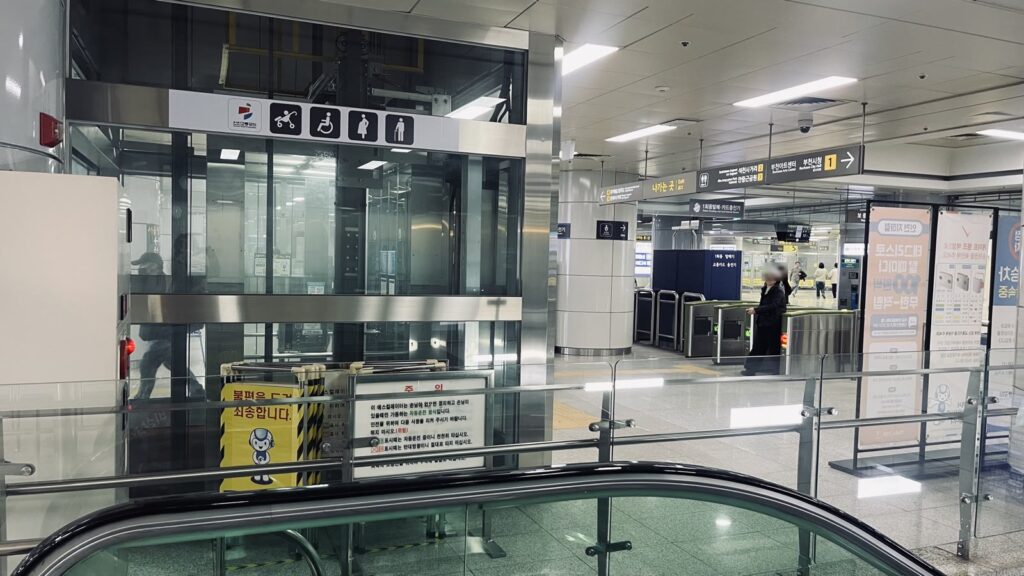
Seoul Metro runs staffed T-Luggage counters, open every day from 09:00 to 22:00, at six stations. The listed basement locations are:
| Station | Line | Where |
|---|---|---|
| Seoul Station | 1 | B1, towards exit 1 |
| Hongik Univ. Station | 2 | B1, towards exits 3 and 4 |
| Jamsil Station | 2 | B1, towards exits 3 and 4 |
| Myeongdong Station | 4 | B1, towards exits 9 and 10 |
| Gimpo Airport Station | 5 | B1, towards the I-Center |
| Jongno 3-ga Station | 5 | B1, towards exit 6 |
They hold bags and also deliver them the same day. These are the prices from the Seoul Metro page on 23 November 2026, weekday first and weekend second:
| Case size | Storage, first 4 hours | Delivery between stations | Delivery between a station and Incheon Airport |
|---|---|---|---|
| Up to 20 inches | 3,000 / 4,000 won | 17,000 / 25,000 won | 20,000 / 29,000 won |
| 20-23 inches | 4,000 / 6,000 won | 17,000 / 25,000 won | 20,000 / 29,000 won |
| 23-27 inches | 6,000 / 9,000 won | 26,000 / 38,000 won | 26,000 / 38,000 won |
| Over 27 inches (delivery up to 36 inches) | 9,000 / 13,000 won | 31,000 / 45,000 won | 31,000 / 45,000 won |
Storage beyond four hours adds 1,000 won an hour. You can walk up, or book at Tluggage.co.kr. A weekday delivery of a case up to 23 inches costs 17,000 won, which equals eleven subway rides on a card, so delivery makes sense when carrying the case is the problem rather than when the fare is. Storage of a small case for the first four hours on a weekday is 3,000 won, about two subway rides.
The last walk counts
Ask the hotel which elevator exit to use with luggage and whether the route from that exit to its entrance crosses a road or has stairs. Save the answer with the address; then compare that exact walk with the nearest bus stop before choosing your airport route.
When a taxi earns its fare
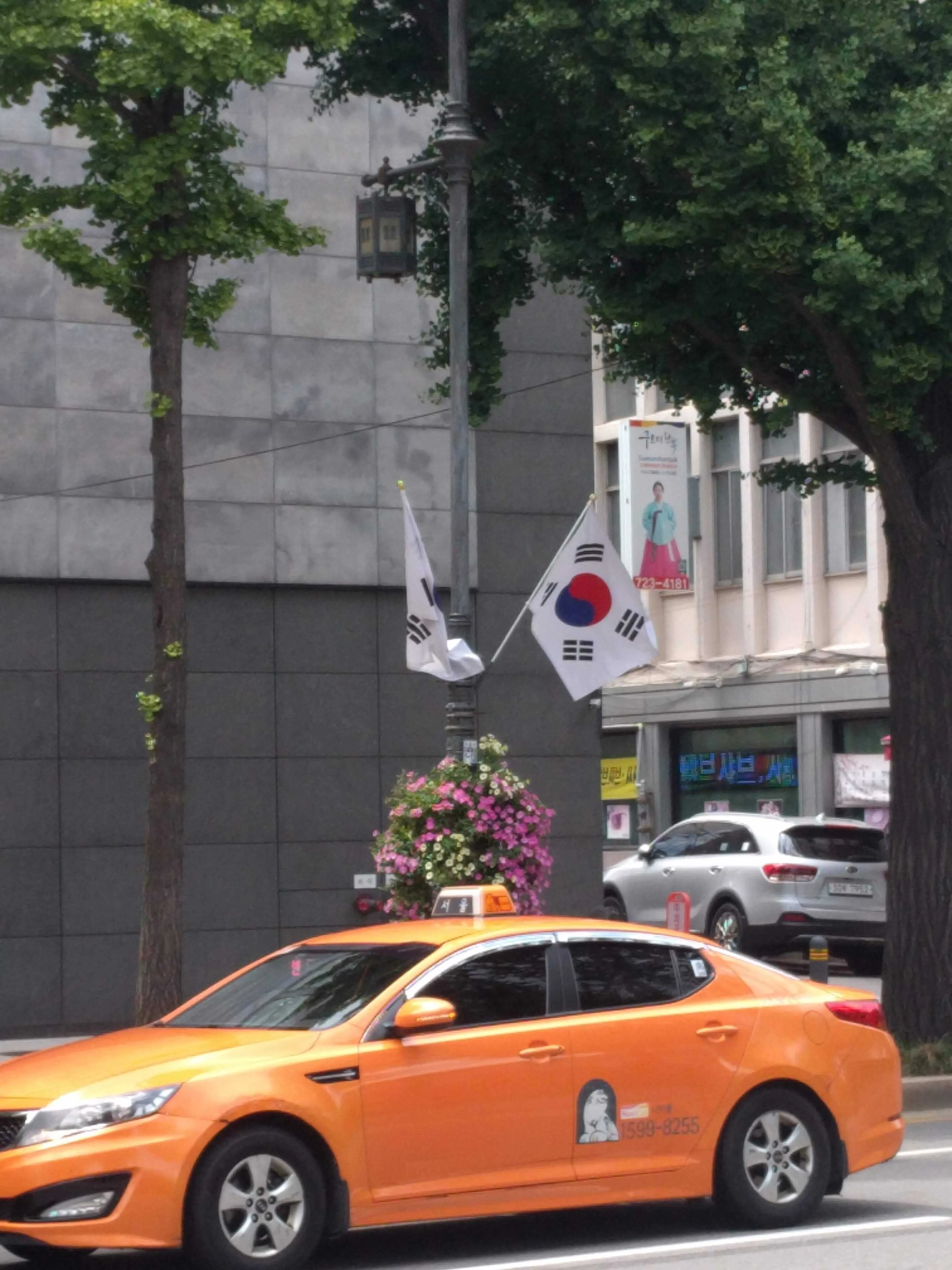
Choose one for the reduction in carrying, when that matters. Traffic means it may not be faster, and no driver can promise an arrival time the road will not allow. Compare the total for the group and confirm that both people and bags will fit, because one ordinary taxi does not solve every family and suitcase combination. The Seoul taxi guide has the fares.
Before you reach the ticket gate
- Measure the case: length plus width plus height under 158 cm, weight 32 kg or less.
- Keep the hotel address and your chosen exit on your phone.
- Have payment ready before you stand at the gate with bags. Tmoney keeps everyday transport straightforward, and the Tmoney guide covers buying and topping up.
- An airport rail ticket may not cover your later subway rides, so check the ticket type before you change services.
- Know your alternative. If the lift is out or you are more tired than expected, ask staff and change the plan.
Do not carry a case down stairs you cannot manage safely. Pick a route you can handle from the platform to the hotel door, not just one that looks efficient on a map.

Pages behind this advice
Checked 23 November 2026.
- Seoul Metropolitan Government: subway page with the basic fare on a transit card
- Seoul Metropolitan Government: taxi page with the daytime base fare and airport taxi fares
- Airport Railroad (AREX): all-stop train fare table, including Incheon Airport Terminal 1 to Seoul Station
- Seoul Metro: passenger terms for Lines 1 to 8, with the limits on carry-on items
- Seoul Metropolitan Government: press release on one accessible route at all 338 stations and the 13 transfer stations to improve
- Seoul Metro: T-Luggage storage and delivery service, with stations and prices