
One Extra Night: Seoul or Busan?
If your route runs through Seoul, Suwon, Jeonju, Gyeongju and Busan and you have one extra night to place, I would usually give it to Busan. Seoul is where you arrive and leave, so it tends to get the most nights already, while Busan is often squeezed into one rushed day at the end of a long journey south.
The exception is a trip that flies home from Seoul with an early departure: then the extra night may be better spent in Seoul, to make the last day calm. The deciding question is not which city is better, but where your route is currently tightest.
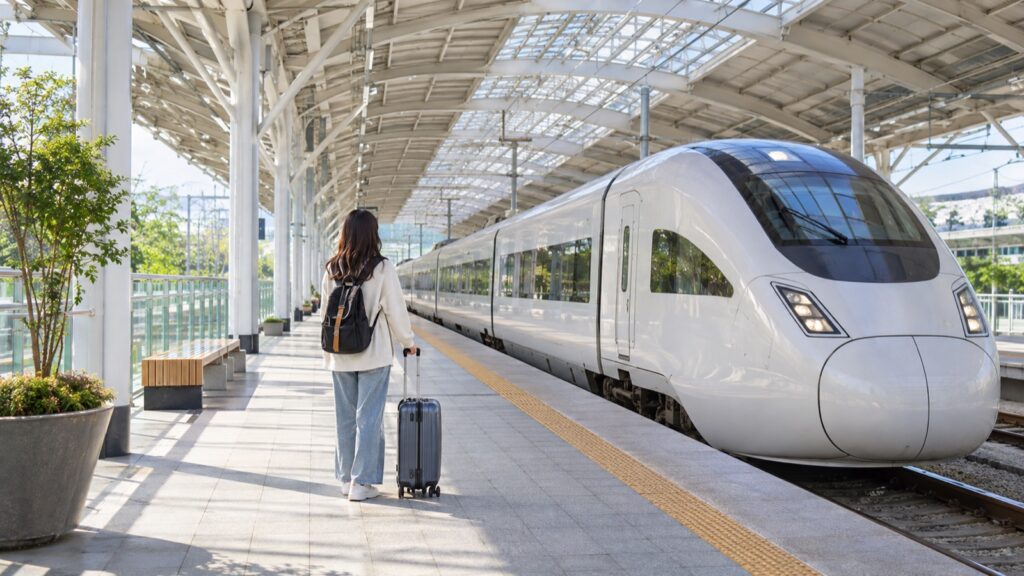
Find the tightest part of your route first
Lay the trip out as a list of nights, then mark each day by what it has to carry. A day with a long train ride, a hotel change and sightseeing is a heavy day. A day that starts and ends in the same hotel is a light day.
Take one possible plan as an example: four nights in Seoul at the start, Suwon as a day trip, one night each in Jeonju and Gyeongju, one night in Busan, and the journey back straight after. In a plan like that, every day after Seoul is a moving day.
That stretch is where an extra night does the most good.
| If your own plan looks like this (examples) | Put the extra night in | Why |
|---|---|---|
| Seoul 4 nights, Busan 1 night | Busan | One night in Busan gives you only one side of the city |
| Seoul 2 nights at the start, flight home from Incheon | Seoul, at the end | A night near the airport line protects the flight home |
| Busan 2 nights already, flight home from Busan | Seoul | Seoul has the most to do on a free day, in any weather |
| Children or older travellers in the group | Wherever the group changes hotel most often | Fewer hotel changes matter more than one more sight |
Why Busan usually wins the extra night
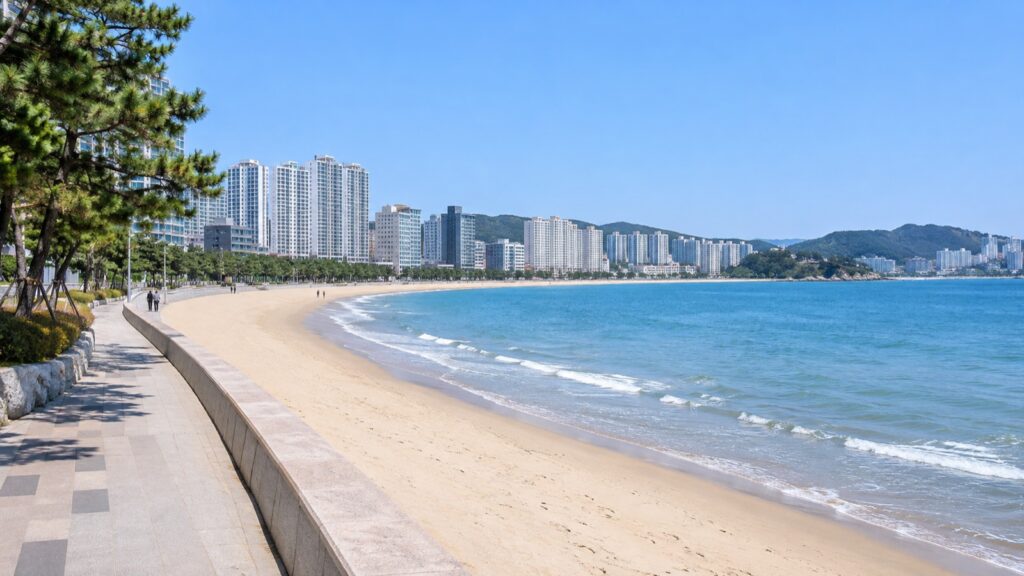
Busan is really two different trips. The old port side, around Nampo and Jagalchi, is on Metro Line 1, a short ride from Busan Station. Haeundae and the coast are across the city on another line, so moving between the two sides takes time out of your day. One day covers one side comfortably. Two days let you see both without spending the day on the metro.
Haeundae deserves to be one of the anchors of a Busan stay rather than a quick stop, with the day’s travel time built around it. With a single night, that is hard to do once you have arrived with luggage and found the hotel.
There is also the arrival itself. Seoul Station to Busan Station by KTX takes about three hours. Check the departure station, the ticket and the travel time together, because those three decide how much of the arrival day is left. If you arrive after lunch, you have an afternoon, not a day.
Our guide to Busan in one or two days shows what each side of the city looks like as a day plan.
When Seoul is the better choice
Give the night to Seoul if any of these are true:
- You fly home from Incheon early in the morning. Coming back from Busan the day before an early flight is possible, but it makes the last evening a transfer. A night in Seoul, near the airport railway, takes the pressure off. Our guide to early flights from Incheon covers the timing.
- Your Seoul days are already split into too many neighbourhoods. If each Seoul day crosses the city twice, one more day there lets you group the sights by area. See our guide to Seoul days with too many neighbourhoods.
- The weather is the wrong kind for a beach. In the coldest months, or on a wet day, Busan’s coast loses much of its pull, while Seoul has more indoor options close together.
Why do moving days matter more than sights?
Having lived in Korea for close to 30 years, I know the trains here are quick and comfortable, and that is exactly why long routes look easy on paper. The train is the short part. Packing, checking out, getting to the station and finding the new hotel take the rest of the day.
Grouping the places you want to see by area, so each day stays in one part of the city, is the best way to plan Seoul. The same idea works for a whole country route. An extra night is most valuable where it stops two moving days from running back to back.
So before you choose between Seoul and Busan, look for the place in your plan where you check out two mornings in a row. Put the extra night there. On most routes through the south, that place is Busan.
Still choosing the order of cities? Our nine-day Seoul, Busan and Jeju plan shows how we space the moving days. For the train itself, see our guide to Seoul to Busan by KTX.
A quick check before you book the extra night
- Count the nights in each city. Which city has only one?
- Mark every day with a hotel change. Are any two in a row?
- Where does your flight home leave from, and at what time?
- In Busan, which side of the city matters to you: the old port, the coast, or both?
- Does your hotel booking let you add a night at the same rate, or will you need to move?
When the answers point to Busan, add the night there and give each side of the city its own day.
Pages behind this advice
Checked 21 November 2026.