
Seoul Subway Complete Guide.
Updated October 11, 2026
Travel Library
Use Seoul subway lines, transfers and exits without treating the map as the whole route.
Read a journey as five separate decisions
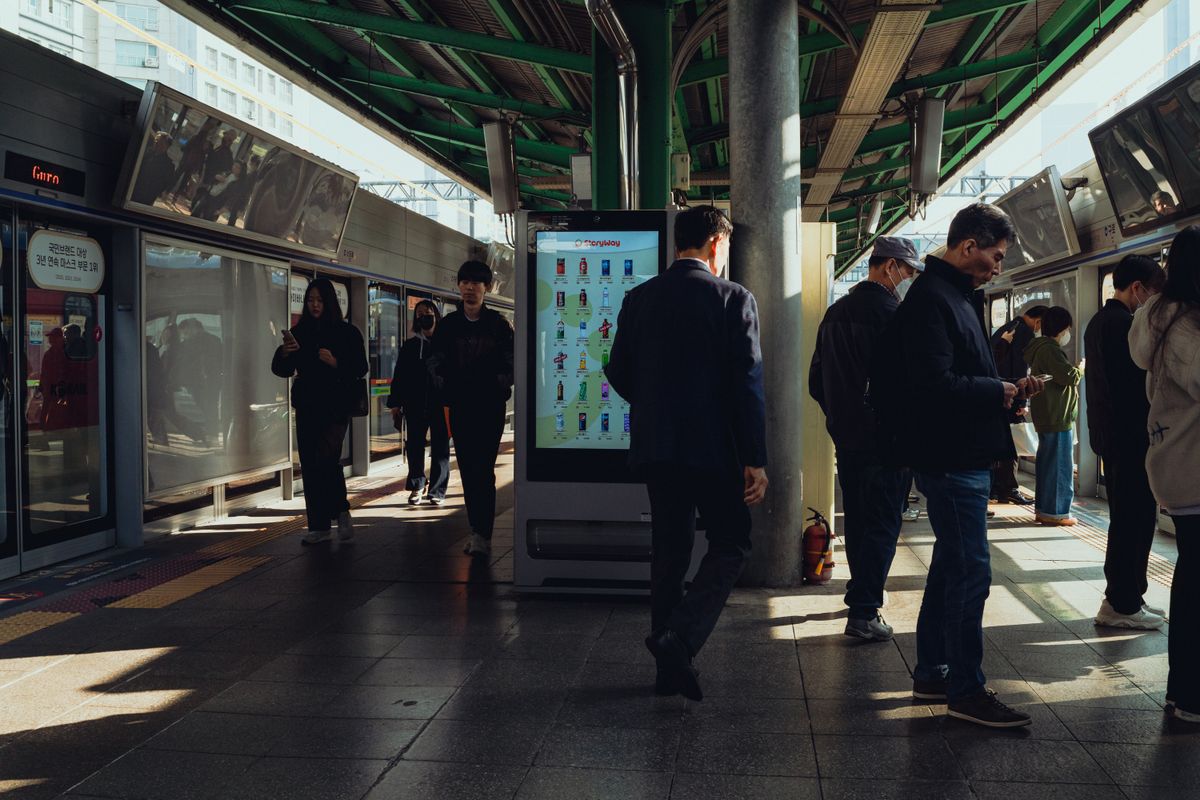
A route result should tell you the starting station, line, platform direction, transfer and final exit. Copy those five details into a short note. At the platform, compare the next station on the sign with your route instead of relying on the line colour alone. At a transfer, change the note to the next line and direction; a destination station name does not by itself identify the right platform.
| Situation | Decision | Check before committing |
|---|---|---|
| Entering | Choose a usable entrance and payment product | Locate an elevator first if stairs are unsuitable |
| Transferring | Follow the next line and platform direction | Allow for the underground walk |
| Leaving | Match the exit to the destination address | Check the street crossing and final approach |
When a route estimate is not enough
For luggage or a stroller, compare the simplest route with the fastest result. Before a late journey, check the final service for each required line and direction: a train at the first station does not prove the transfer is still available. If you miss a connection, stop and establish the next workable route rather than continuing toward a closed transfer. International-card ticket purchases at eligible upgraded machines are different from tapping a bank card at the gate.
- Save the line and direction for each leg.
- Check an accessible entrance and exit where needed.
- Keep the transfer and last-connection details with your route.
- Use the transport page to check the station timetable and retain a taxi fallback.
Check the original information
Practical planning guidance updated 9 October 2026. Availability, operating information and product conditions are confirmed by the relevant operator.
TRAVEL KNOW-HOW
Question answered
How do I use the Seoul subway without getting lost at transfers, exits or peak-time platforms?
Quick answer
Use the subway for predictable cross-city movement, but plan by station exit, transfer walking time and final street direction. A route that looks short on the map can feel long if it has deep transfers, stairs or a wrong exit.
What travelers usually get wrong
- They remember only the line color and miss the exit number.
- They underestimate transfer walks inside major stations.
- They treat the last train or first train as fixed without checking the exact date and direction.
Before you go
- Search by destination address and nearest exit, not only station name.
- For luggage, prefer simpler transfers over the mathematically shortest route.
- Avoid peak commuting times when carrying large bags.
Transfers are part of the journey
Large Seoul stations can require long underground walks. A transfer with fewer stops may still be slower if the platforms are far apart.
When in doubt, compare the route with the fewest confusing transfers against the fastest route. Visitors often benefit from the simpler route.
Exit numbers matter
Many stations have multiple exits spread across several blocks. The correct exit can save time and prevent crossing wide roads unnecessarily.
For museums, hotels and restaurants, save the nearest exit together with the place name.

Internal links for the next decision
Last updated and source-check structure
Original guide: 7 October 2026. Practical update: 8 October 2026. live operator timetables, fares, opening rules and financial terms must be rechecked at the original source before travel. This page is not a ticket, booking, payment or official transport notice.
From the station entrance to the right exit
- Save your destination address and the useful exit number before entering the station.
- Confirm the line and direction from platform signs, including the next station; do not rely only on a colour.
- At a transfer, follow the signs for the next line and allow time for the walk.
- Before leaving the final station, check the exit against the street or building you need.
Paying for a single journey
Since 17 March 2026, Seoul has announced support for international-card purchases of single-journey tickets at upgraded machines on Lines 1–8. Check the available payment options and fee on the machine; this is not a promise that a foreign bank card can be tapped directly at every ticket gate.
When the simplest route is better
With a suitcase, stroller or limited mobility, compare a route with fewer transfers against the fastest estimate. Check elevator access and the final street approach. If your arrival is late, confirm the last usable connection for the exact station, direction and date rather than relying on a network-wide closing time.
Official references and verification scope
Editorial addition and listed source review: . The review covers the guidance and payment announcement cited below; it does not verify live service, every machine or a particular card issuer.
The full network, then the right line
Use the operator’s actual network map to identify the line and interchange, then read the next-station and destination signs on the platform. This is the Seoul Metropolitan Government’s January 2025 English map; open the operator planner for later extensions, current service notices and last trains.

Open the official station and journey planner ↗
| Line | Visitor starting points | The decision before boarding |
|---|---|---|
| 1 | Seoul Station, City Hall, Jongno and eastern rail connections | Check the destination: services branch and some trains do not continue to every outer stop. |
| 2 | Hongik University, City Hall, Euljiro, Gangnam and Jamsil | Main circle trains run in two directions; branch services are separate. Read the next station, not only the green colour. |
| 3 | Gyeongbokgung, Anguk, Chungmuro and Express Bus Terminal | Useful for palace areas and crossing to southern Seoul. Check the street exit before leaving the paid area. |
| 4 | Seoul Station, Myeongdong, Dongdaemun and northern Seoul | Myeongdong is on Line 4, not the similarly named central Line 2 stops. |
| 5 | Gimpo Airport, Yeouido, Gwanghwamun and eastern Seoul | Eastern services branch. Confirm the train destination before boarding. |
| 6 | Itaewon, Samgakji, Gongdeok and west/north Seoul | Useful for neighbourhood trips; allow time for transfer corridors rather than assuming the lines share a platform. |
| 7 | Express Bus Terminal, Konkuk University and north/east connections | A long cross-city line: verify which entrance and direction serve your destination. |
| 8 | Jamsil and south-eastern metropolitan connections | Check the current map for extensions; old printed maps may show a shorter line. |
| 9 | Gimpo Airport, Yeouido, Express Bus Terminal and southern Seoul | Local and express trains share the line. An express may pass your stop; check its stopping pattern. |
| AREX | Incheon Airport, Gimpo Airport and Seoul Station | Express and all-stop trains are different products. An ordinary metro route does not replace an Express reservation. |
| Other regional lines | Gyeongui–Jungang, Suin–Bundang, Gyeongchun, Shinbundang and GTX | Operator, transfer gates, supplements and pass coverage vary. Confirm the exact service; the network is larger than Seoul Metro Lines 1–8. |
These are orientation examples, not an exhaustive station list or a guaranteed step-free route. Use the destination’s full address and exit number for the last walk; ask station staff to confirm lifts and boarding assistance.
A real ticket screen, followed by six practical steps

- Choose the right product. A single-journey card is for the subway only. For buses and repeated journeys, compare a rechargeable transport card.
- Select English on the actual machine. Look for single-journey purchase rather than recharge or deposit refund. If your machine differs, ask station staff before paying.
- Select your destination and passenger category. Confirm the destination station, not just the district. Read the fare and any deposit on the final screen; children’s eligibility is not an arbitrary adult discount.
- Pay using a method the machine explicitly accepts. Do not assume every kiosk accepts an overseas bank card. Collect the ticket, change and receipt before walking away.
- Tap to enter and to exit. Keep this card separate from other contactless cards. If a gate rejects it, use the staff assistance point rather than climbing over or paying again.
- Recover the deposit where applicable. After leaving through the destination gate, put the single-journey card into the separate deposit-refund device. Rechargeable T-money cards do not belong in that machine.