
Gwangjang Market Food: What I Would Order First

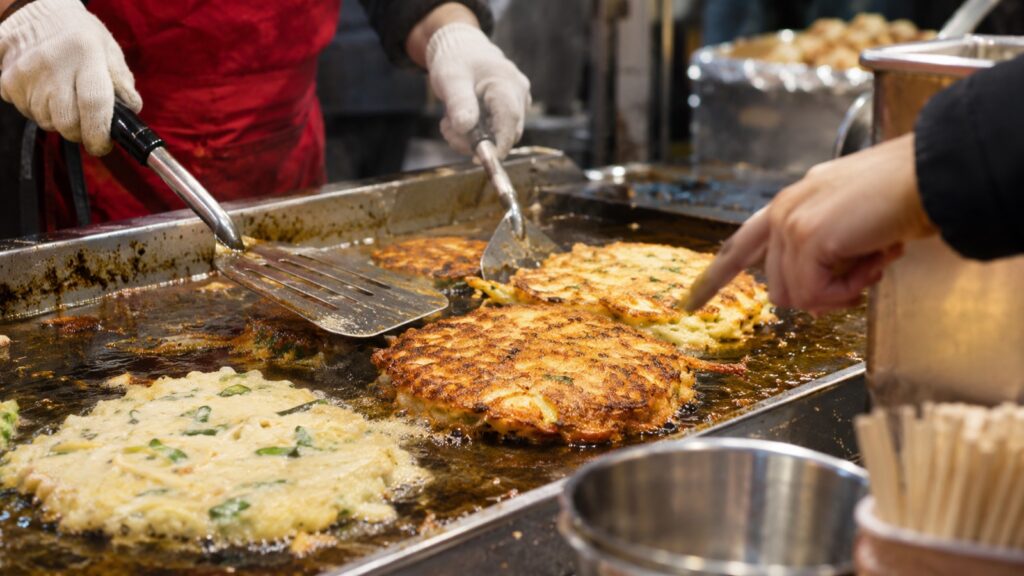
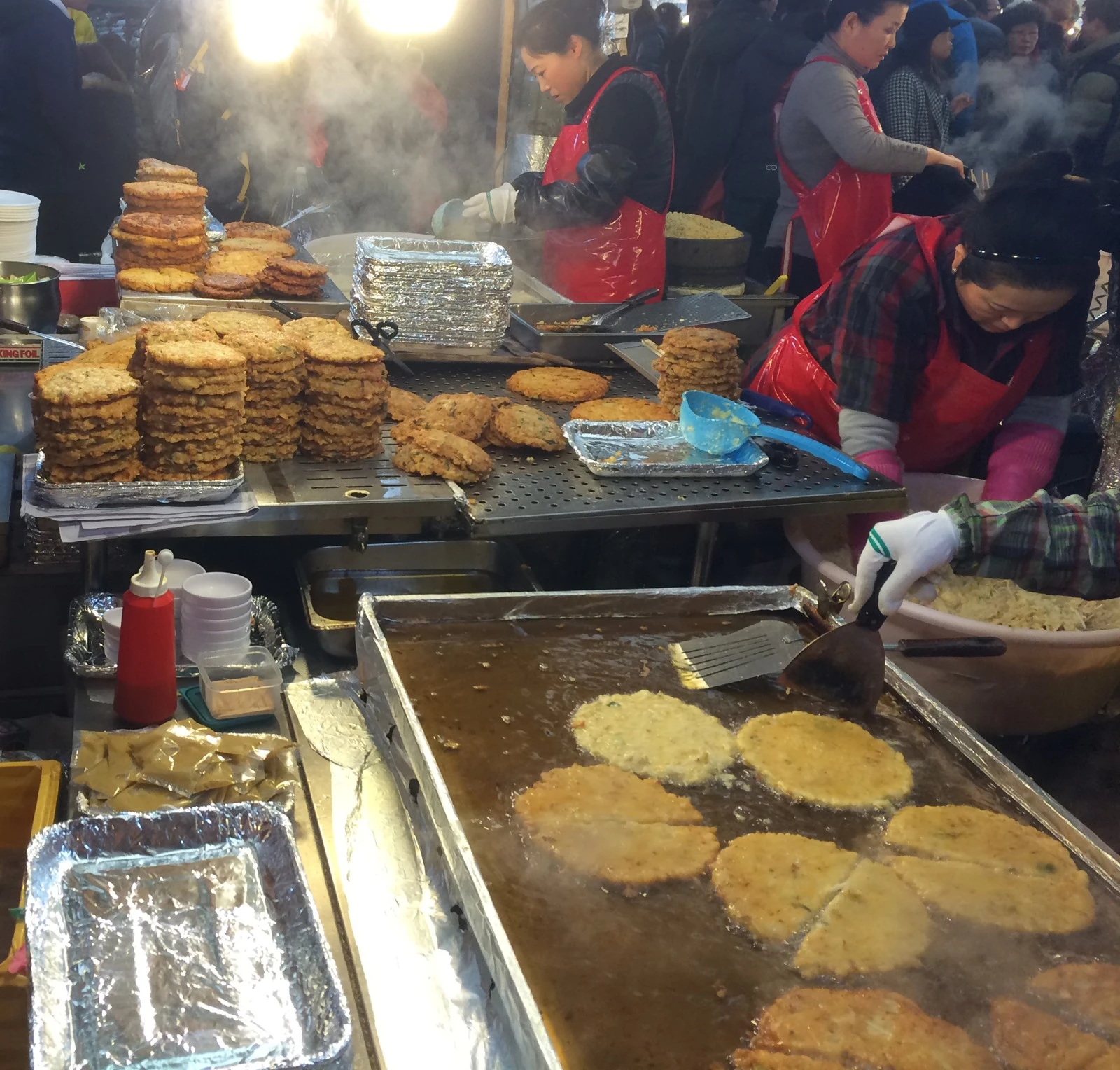
Start with one mung-bean pancake, bindaetteok (빈대떡), if you arrived hungry. If you only want a taste before another meal, start with a small order of gimbap (김밥) instead. Both are on Seoul’s official list of the market’s favourites, and either one leaves you free to decide what comes next.
These days the market is a hot spot overflowing with foreign visitors, and to me that is the fun of it: eating something made on the spot, in the middle of all those people. It is a very good experience.
Food is personal, and with so many choices here no single dish is the right answer for everyone. When someone asks me what to eat at Gwangjang Market, I do not hand them a long list and expect them to finish it. My advice, shaped by living and eating in Korea, is to choose one food you genuinely want, find out what one order includes, and leave room for another taste. I find that variety is the attraction.
The first order: pancake or small gimbap
Treat this as a tasting stop if you already have a substantial dinner planned. If the market is your main meal, look for a seat and something more filling before adding snacks. That distinction matters more to me than finding the longest queue.
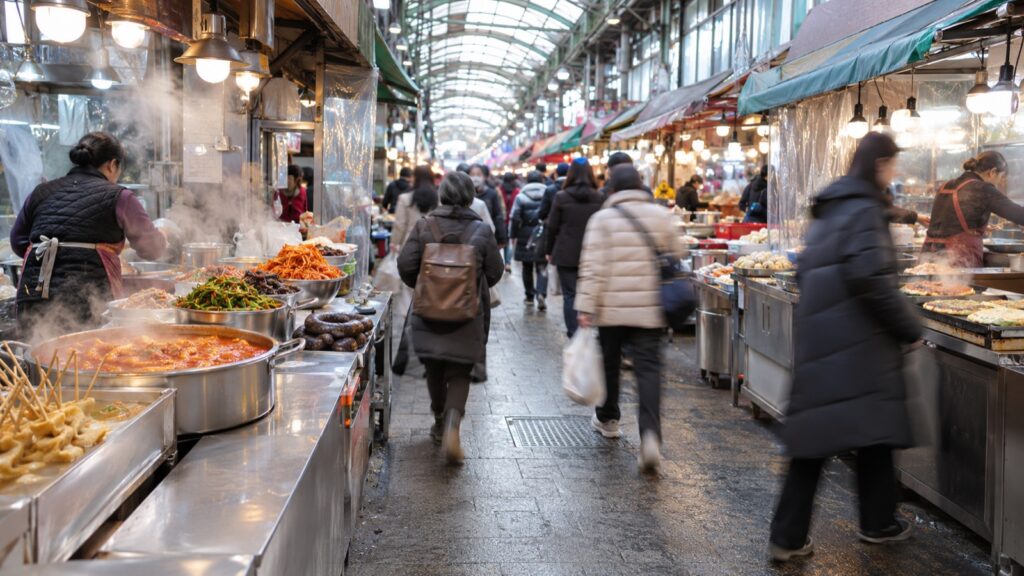
The pancake is the warm, substantial start. If you are sharing, ask what one order contains and whether you can share it at that stall, rather than ordering one each and then adding several other dishes. If you are alone, ask for the smallest order.
The gimbap is what Visit Seoul calls “addictive gimbap”: the small rolls you see in the photo below, also sold as mayak gimbap. Check the filling and any sauce that comes with it instead of assuming every roll is the same. Look at the actual serving before you decide how much to order, because a picture on a phone will not tell you how filling the plate in front of you will be.
The rest of the counter
These are the other foods Seoul’s visitor guide names, with their Korean names so you can match them to the signs. Add one when you still have room, and ask what one order includes, because a serving differs from counter to counter. The descriptions come from VISITKOREA’s street food guide and fritters recipe, and each stall has its own recipe.
| Food | Korean | What it is |
|---|---|---|
| Tteokbokki (stir-fried rice cake) | 떡볶이 | Rice cakes boiled down in a gochujang (chili paste) sauce, so expect some heat. |
| Eomuk (fish cake) | 어묵 | Crushed fish fillets mixed with salt and other ingredients, then fried. Stalls usually skewer it and simmer it in anchovy broth. |
| Modum-jeon (assorted savoury pancakes) | 모둠전 | A mixed platter of pan-fried pancakes, so you get several kinds at once. |
| Sundae (Korean sausage) and head meat | 순대, 머리고기 | Pig intestine stuffed with clotted blood, glass noodles, sticky rice and vegetables. Head meat is sold alongside it. |
| Korean-style meatballs | 동그랑땡 | Small round patties of minced meat with tofu and vegetables, dipped in egg and pan-fried. |
| Yukhoe (beef tartare) | 육회 | This is raw beef. Do not pressure a companion to try it for the sake of the experience. |
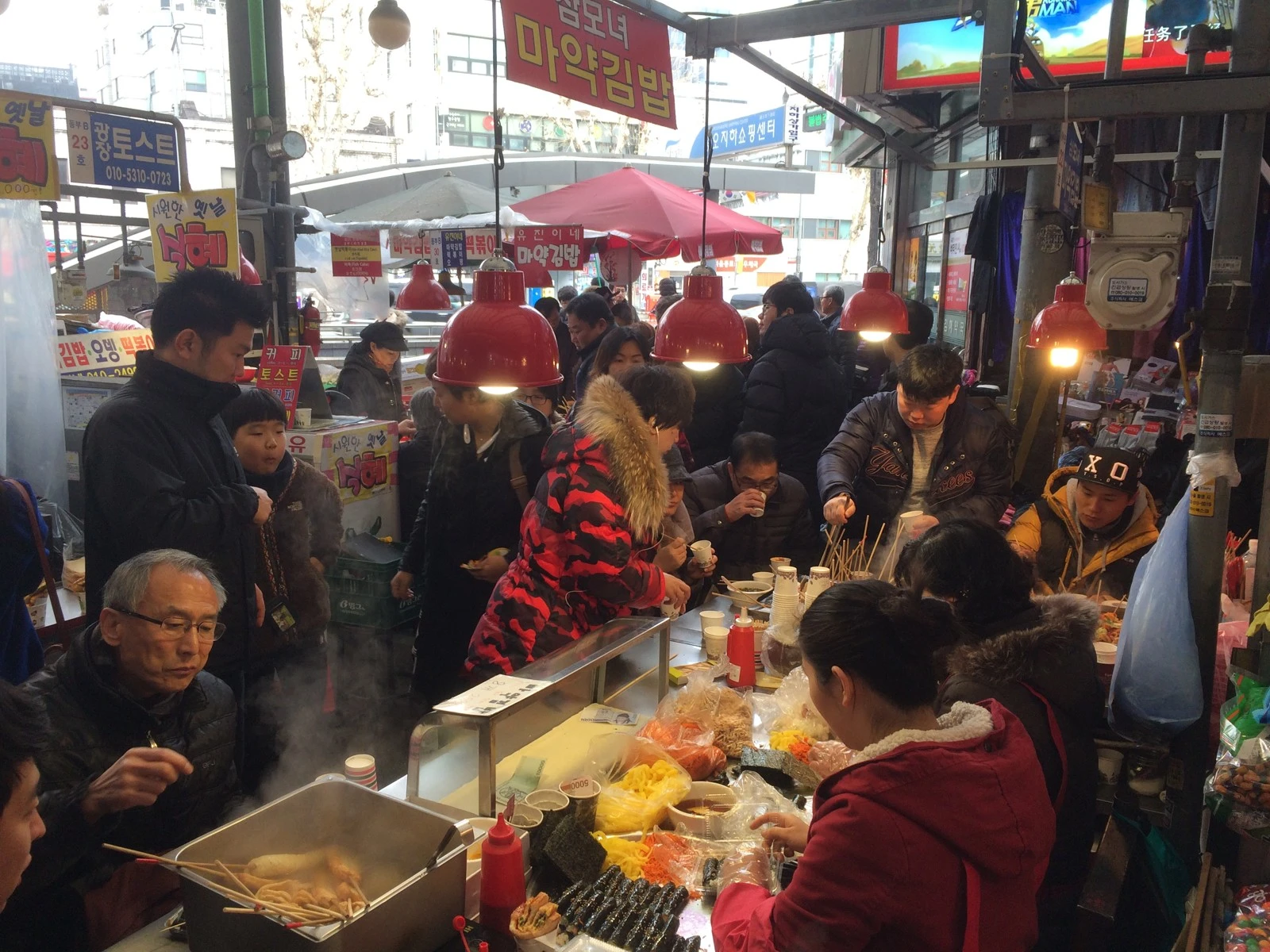

There are other ways to enjoy the market. Walking through, seeing the counters and sharing a familiar cooked snack can be a perfectly good visit.
Four things to settle before the food is cooked
Point to the exact item and confirm the price, the serving size, the quantity and how to pay before preparation begins. In a busy market, a clear order is kinder to both you and the seller than a misunderstanding after the plates arrive. Visit Seoul describes most dishes as reasonably priced, but it publishes no stall prices, so go by the menu in front of you. Eolmayeyo? (얼마예요?) means “How much is it?”
Prices here have been disputed in public more than once, which is why the total comes first. In December 2023, after overcharging complaints, the market’s merchant groups agreed with the city to show the weight or quantity beside menu prices. In November 2025 a YouTuber said she ordered a sundae listed at 8,000 won and was charged 10,000 won with meat she had not asked for. The vendor said she had asked and the customer had agreed, and the merchants’ association suspended the stall for ten days from 10 November. In April 2026 Korea JoongAng Daily reported three stalls selling a bottle of water for 2,000 won where most charged about 1,000, and city and district officials inspected the market. Jongno District said then that it would start registering stalls by name in June 2026. These reports tell you nothing about any one stall today, and they do not say whether every stall now shows quantities.
Ask whether an offered addition is included or costs extra. Do not use what you know about restaurant side dishes to assume that everything handed over at a market stall is free. If you want only one dish, make that clear. A smile and pointing can start the conversation, but use a translation app when the answer changes the bill.
The order is simple: identify the dish, agree how much, confirm the total, then order. If you still cannot understand what you are buying, move to another counter. That is not missing out. It keeps the visit relaxed.
Queues, seats and who you came with
A popular stall can be worth the wait when that particular food is why you came. If you simply want to try a pancake, compare what is being cooked, the visible menu and whether the seating works for you first. Do not spend most of a short visit waiting because a stall appeared on a screen.
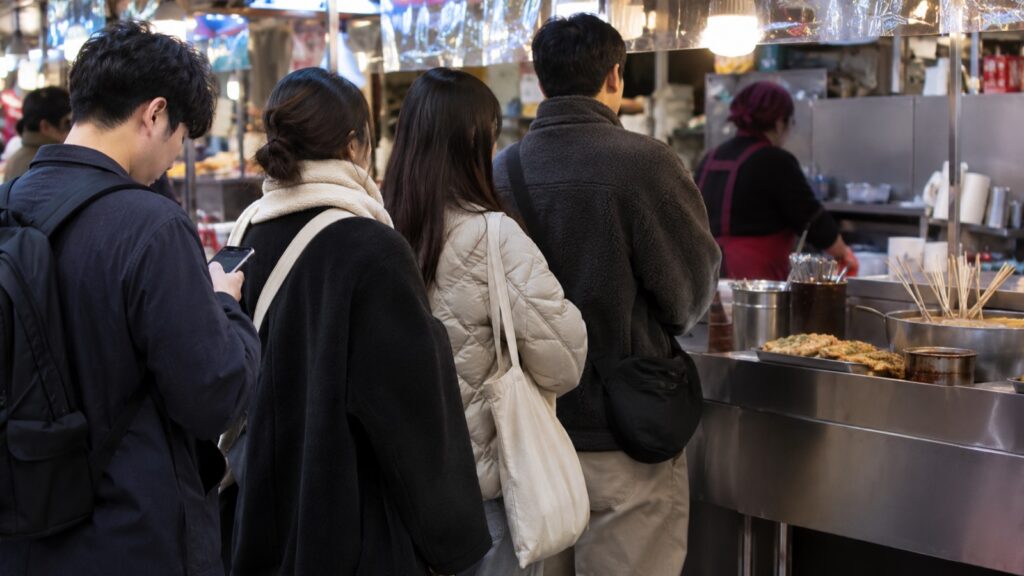
With an older companion or someone who needs a rest, a usable seat matters more than a famous name. With children, begin with a manageable order rather than several unfamiliar foods at once. If you have a reservation later, protect that meal instead of arriving full after “just one more” dish.
Someone visiting mainly for food may happily spend longer choosing and waiting. Someone combining the market with a palace or museum may prefer one satisfying stop before moving on. Neither needs to copy the other’s route.
Hours, cash and how to get there
As of 7 November 2026, Visit Seoul listed the food alley as open daily from 09:00 to 23:00, all year. The main market keeps shorter hours, 09:00 to 18:00, and closes on Sundays. Those are market-wide times and individual counters may differ, so do not make the last minutes of the evening your only chance to eat, and check with a particular stall if it matters to your plan. The nearest listed subway stop is Jongno 5-ga Station on Line 1, Exit 8, 62 metres away.
VISITKOREA advises carrying some cash for traditional markets and street shops, because some accept only cash. Bring a modest amount of won and ask at each stall before ordering. The market has no single payment rule, and there is no need to convert a whole trip’s spending money for one visit. My money and payment guide covers exchange and cards.

Plan your next stop before ordering another round, and keep it close. Visit Seoul names Jongmyo Shrine, Sewoon Shopping Center and Dongdaemun Design Plaza as nearby.
When to eat somewhere else
If you need a quiet, unhurried meal with dependable seating, choose a restaurant rather than asking the market to do a job it may not suit. If ingredients matter to you, ask directly about the dish, sauces and preparation. You cannot tell ingredients from appearance, and a vegetable-looking dish may not meet every dietary requirement. When the answer is unclear, choose a meal you can verify.
If the crowds, seating or communication make the visit uncomfortable, leave without feeling you failed to experience Korea. One clear order is enough. If you enjoy it and still have room, add something different. Your appetite, your companions and your plans should decide the meal.