

Look for the call button on the table. It is the most useful detail I tell visitors, and I have found these buttons very common. Press it when you need something. If there is none, raise your hand politely and catch someone's eye. You do not need to sit wondering whether asking is rude, and you can leave the habit of calculating a tip behind. After years of eating in Korea, I do not think visitors need a complicated set of rules to enjoy a restaurant. Here is how a meal usually goes, from the door to the bill.
Choosing the place: a full room and a menu you can read
Go where the people are. In my experience, a busy restaurant usually has good food. Then look at the menu before you commit. Foreign visitors usually order from the pictures, and they really struggle with a menu that has none. My advice is to check that the pictures are good and that the menu shows clearly what kinds of food the place serves.
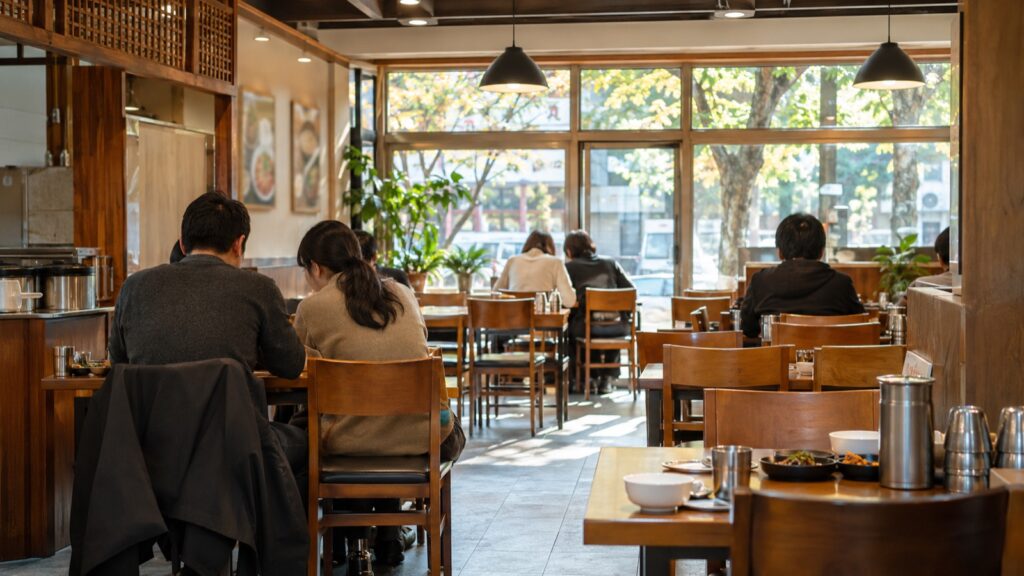
Sitting down: work out what kind of place it is
The meal becomes much easier once you know how this particular restaurant works. Take a look around before you order.
| What you see | What to check |
|---|---|
| A counter or ordering kiosk | Where to order, pay and collect the meal |
| Staff taking orders at tables | Seating, any minimum order and how to call for help |
| A grill or large shared pot | Minimum portions, included items and who cooks |
| A self-service station | Which water, utensils or side dishes to collect yourself |
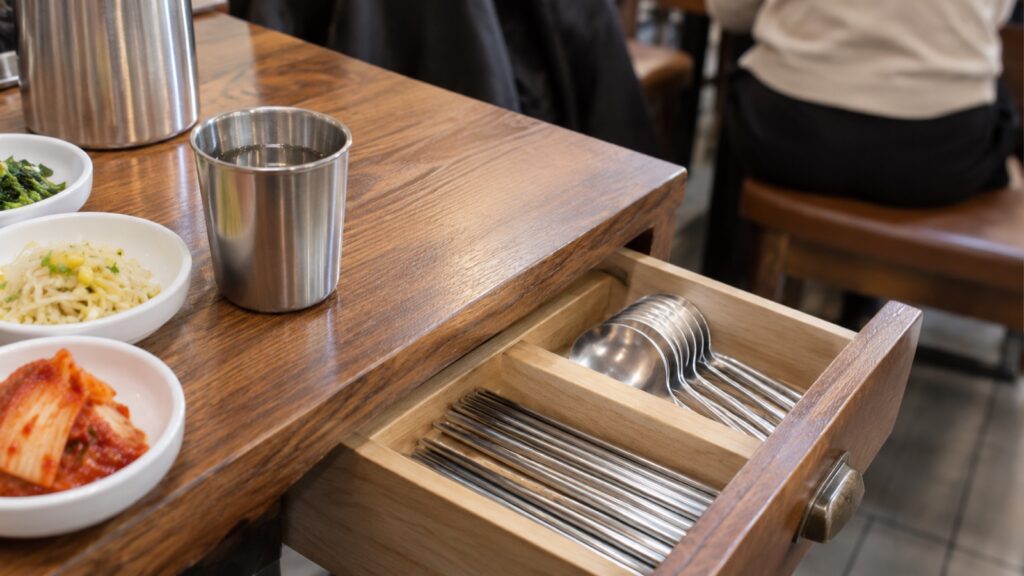
VISITKOREA notes that more restaurants now have you serve your own water and side dishes or order from a machine. Utensils and napkins are often in a small drawer at the table, and some chairs lift open to store coats and bags. None of this means staff are ignoring you. If you cannot tell, ask.
Ordering: plan on one main dish each
I generally plan for each diner to order a meal, and I recommend that expectation to visitors. It is a custom rather than a law, and restaurants differ. Some set a minimum per table, some require several barbecue portions, and some sell one large dish to share. Ask before you order if your group wants less than one main dish each, and do not assume one person's order lets a whole group occupy a table.
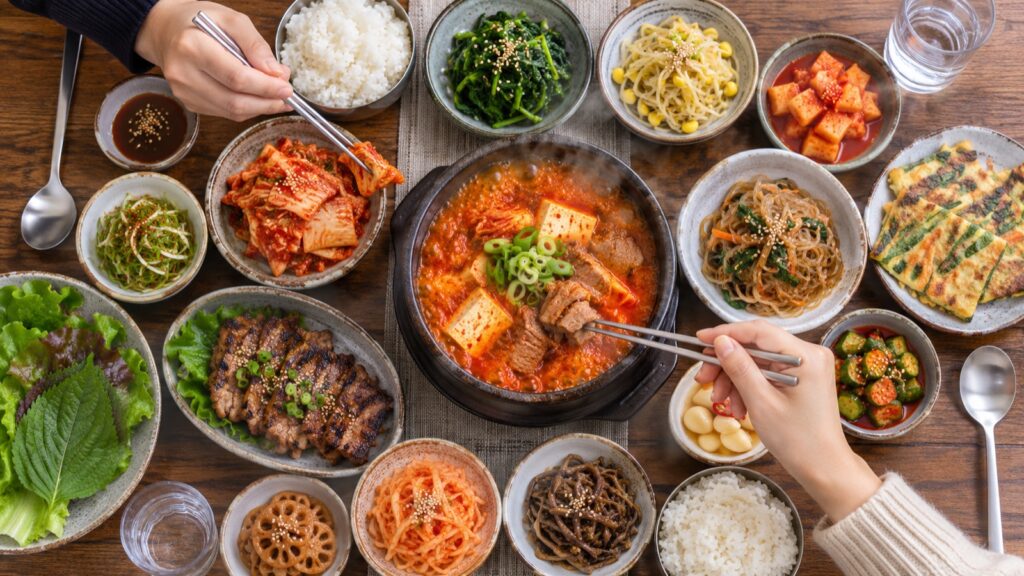
Know the actual meal and total. The photo shows one attractive plate, not how many portions you are expected to buy. Confirm whether the menu price is for one serving or the whole dish, and whether rice or other extras are included. That short conversation beats discovering a minimum after everyone has sat down.
A few words help. Showing the item or a short translation works too, since not every member of staff will speak your language.
| You want to say | Korean | Say it like this |
|---|---|---|
| Excuse me! (to call staff) | 여기요! | Yeogiyo! |
| I'd like to order. | 주문할게요. | Jumunhalgeyo. |
| Three portions of galbi, please. | 갈비 3인분 주세요. | Galbi saminbun juseyo. |
| Water, please. | 물 좀 주세요. | Mul jom juseyo. |
| More side dishes, please. | 반찬 좀 더 주세요. | Banchan jom deo juseyo. |
| I'd like to pay. | 계산할게요. | Gyesanhalgeyo. |
| How much is it? | 얼마예요? | Eolmayeyo? |
| Thank you. | 감사합니다. | Gamsahamnida. |
Sources: VISITKOREA, the government's Korean Language Card and Visit Seoul, checked 7 November 2026.
During the meal: buttons, water and refills
When I use a call button, I press it once and give the staff time to respond. Repeated pressing or shouting is unnecessary, and VISITKOREA warns that the bell can be louder than you expect. Keep the request simple: another bowl, water or the bill.
Free side-dish refills are, for me, the best perk of eating in Korea. Most restaurants give you side dishes at no charge, so eat as much as you like. VISITKOREA says asking for more water or side dishes costs nothing, but some places do charge for refills or have you collect them at a self-serve bar, so ask before assuming that everything on the table is unlimited. Extra meat, rice, special side dishes and drinks can be separate purchases.
Barbecue and other shared tables
As I see it, most countries do not put a fire on the dining table. Korea has many restaurants that do, and I recommend trying one. A bubbling pot of soup, bulgogi, samgyeopsal (pork belly), even steak. Many dishes here are cooked right at your table and eaten with vegetables, and you do not have to find a Japanese restaurant to get that. Living here I hardly notice it, but when I go abroad I often really miss it. Try as many kinds of food as you can.
Bulgogi is what foreign visitors often eat, and I find it delicious any time. In my experience one portion usually costs 15,000 to 20,000 won wherever you go, and the one I eat is usually about 20,000 won. Those are my own figures: bulgogi is not on the Korea Consumer Agency's dining price list, checked 7 November 2026.
Settle portions and cooking help before the food arrives. Some places help cook, and at others you manage more of it yourself. Rather than guess from another restaurant's routine, ask what happens here, particularly when appetites differ or someone does not eat the main meat.
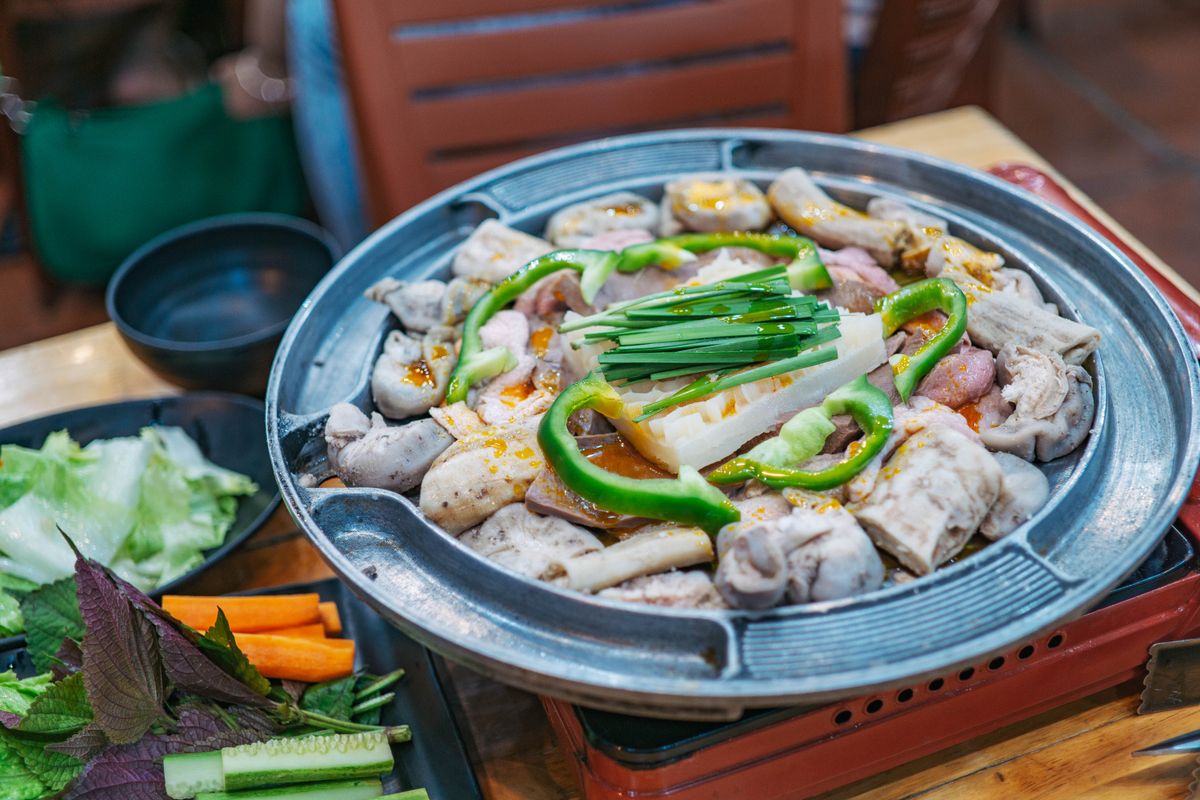
Order a manageable amount first, within the restaurant's minimum, and ask whether more can be added. Keep coats and bags away from the grill and the aisle. A shared meal should be comfortable for the whole table, and filling every space with food is not the goal.
For soup, noodles or a rice dish, check whether it is an individual serving before applying barbecue assumptions. A solo traveller need not make every meal a group-style one. Pick a format that suits your numbers and your time rather than forcing a famous dish into an awkward meal.
Allergies and other dietary needs
I would not assume every casual restaurant is used to detailed allergy requests, which is why I recommend explaining the specific ingredient before the order is accepted, not after the dish arrives. A calm, precise question gives the staff a better chance to tell you whether they can help.
Ask about broth, sauce and preparation, not only the ingredients you can see. Taking off a topping does not remove what is already in the stock or prevent cross-contact, and a vegetable version is not an allergy guarantee. If the answer stays unclear, choose something else. VISITKOREA's dietary page has more on vegetarian requests.
For a serious allergy, prepare an accurate written explanation and follow your clinician's travel advice. A translation app can help communicate, but it cannot verify a kitchen's procedures. Use my ingredient-question guide to prepare the conversation, not as proof that any particular meal is safe.
Manners that matter
Keep your voice considerate of nearby diners and follow the seating arrangement. Visit Seoul's etiquette page adds a few more: wait for the eldest at the table to start, do not leave chopsticks or a spoon standing upright in rice, and put them back in their original position at the end. If you are dining with Korean hosts, take your cue from them. Paying attention matters more than memorising gestures and then feeling anxious all through lunch.
Check last-order and break times when your schedule is tight, because a restaurant listed as open later may stop taking food orders earlier. If you have a train or a show to catch, pick a simpler meal and allow realistic time.
The bill
Find out whether you pay at the counter or at the table, and read the bill. Tipping is not expected, and I do not calculate a percentage for a normal restaurant meal. A polite thank-you is enough. One thing to watch for at the expensive end: Visit Seoul notes that many major hotels and upscale restaurants add a 10 percent service charge on top of 10 percent VAT, so a higher total there is not a mistake.
For your first meal, choose somewhere with an ordering method and a menu you can understand, ask about the minimum and what is included, and enjoy it. There will be time for more complicated dining later. Restaurants set their own rules on minimums, refills and hours, so ask when it matters.